
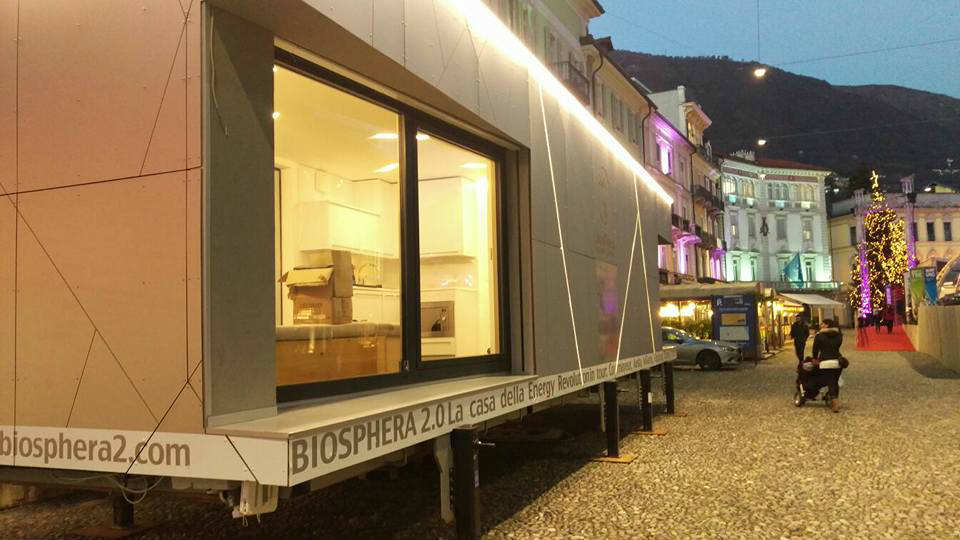
SELF-SUFFICIENT HOUSE
The house of the future? A energy 0, on a human scale, which chooses comfort as the cornerstone of its design. Living well with the minimum possible environmental impact: this is the goal of the project Biosphere 2.0, which is included in the research on the so-called passive houses, passive houses, that is the civilians architectures designed to provide for the energy needs through flows of heat and cold drawn from the external environment. And thus reduce the cost of these consumptions to zero.
An passive house ensures thermal comfort without any heating system warm-up “conventional” inside, type boiler e radiators or similar systems. The same goes for the cooling systems, like the conditioners.
In short, extreme attention to the energy waste and the application of cutting-edge techniques for what is defined as “zero energy generation” of housing.
READ MORE: Passive house construction is on the rise in Italy, and we're behind Northern European countries.
BIOSPHERA 2.0 PROJECT
Biosphera 2.0, in addition to being energy autonomous places the living experience and the well-being of its inhabitants at its centre: built using the best available technologies, on a human scale, has a almost total sound insulation. In the world of noise, where thenoise pollution has an impact severely disabling on people's lives, this means a significant increase in happiness and well-being.
Home, itinerant e mobile devices, is the result of a project by AktivHaus in collaboration with the Polytechnic of Turin andUniversity of Valle d'Aosta which combines scientific research on new building materials with environmental monitoring: it has been subjected to thermal stress very hard, transported to the beaches of Emilia Romagna as well as to the sharp peaks of the mountains of Courmayeur, with outside temperatures from -15 °C to + 40 °C.
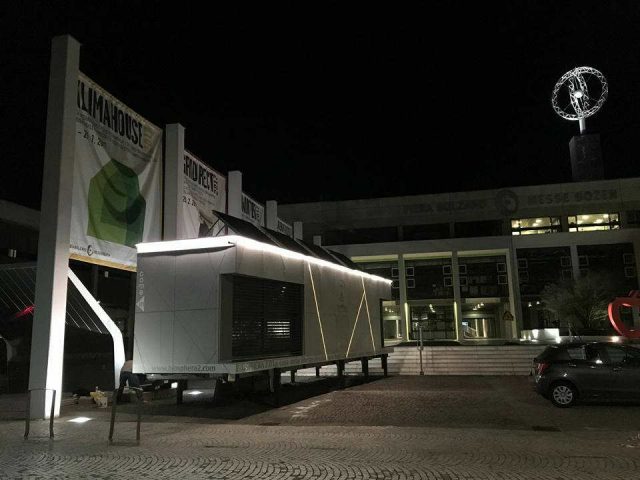
The itinerant living experience has moved to various locations in Italy, from Turin to Riccione passing for Rome and Genoa. As many as 24 inhabitants were able to test the functioning of the passive house by living inside the 25 m² di Biosphere 2.0 equipped with all the normal services for living: led illumination, induction cooker, appliances, heating and cooling, divided into living area, sleeping area, bathroom and technical center. In the meantime, their vital parameters were monitored and how the body reacts to environmental changes: it was found that the temperature between the walls was always between between 21°C in winter and 25°C in summer without any external source of heating/cooling, and that, therefore, there were no repercussions on health and well-being of the guests present.
The future implication of such an experiment, together with the many studies on the system of passive houses, is that we can hope for a world of housing modules that have zero energy sum, and they are light, transportable, adaptable to any climate. But, above all, they will not pollute the planetbeing completely sustainable in their operation.
Paul Cunial told a Don't Waste What is the Project? BioSphera 2.0.
(The featured image and the photo in the text are taken from the project's Facebook page BioSphera 2.0)
Read also:
- How to use air conditioning
- Gas bills: tips for saving on hot water and cooking.
- Let's learn not to waste water every day. First and foremost, in our homes and domestic life.
- Gas and electricity bills can also be cut by making purchases together. Like groceries,
- Electricity costs and bills: 5 simple steps to save and avoid waste
Want to see a selection of our news?
- Sign up to our newsletter clicking here;
- We are also up Google News , activate the star to add us to your favorite sources;
- Follow us on Facebook, Instagram e Pinterest.