

Every year and every month, the Mediterranean Sea's waters are getting warmer: summer 2026 is considered a record-breaking one, and in July the average surface temperature was 27,1°C , the highest value ever recorded for a July. The previous record was around 26,7°C in July 2025. In some coastal areas of Italy, France, and Spain, the water temperatures reached or locally exceeded 28–30°C , although temperatures are not uniform across the basin.
A warmer Mediterranean also tends to become drier , because warm air favors evaporation while average precipitation is expected to decrease in many areas. For this reason, the region is defined by the IPCC (Intergovernmental Panel on Climate Change, the United Nations' leading international body for assessing climate-related science) as a climate hotspot.
Our marine basin is warming faster than the global average, and several mechanisms are reinforcing each other, creating the conditions under which scientists believe the Mediterranean will be increasingly warmer in the near future.
- The ocean absorbs excess heat produced by increasing greenhouse gases. As concentrations of CO₂ and other gases continue to rise, the Mediterranean will also continue to accumulate heat.
- The Mediterranean is almost closed, connected to the Atlantic mainly by the Strait of Gibraltar. This limits the exchange of its waters compared to an open ocean, and water exchanges very slowly with the Atlantic Ocean.
- The Mediterranean has a shallow depth compared to other seas and for this reason it warms up much faster.
- It is surrounded by rapidly warming lands. Southern Europe and North Africa are experiencing particularly intense warming; the warming atmosphere transfers additional energy to the sea.
- Less rain and more evaporation make the basin warmer and saltier. The IPCC notes that the Mediterranean surface has already warmed by approximately 0,29–0,44 °C per decade since the 80s, with particularly marked increases in the eastern Mediterranean.
- Marine heatwaves are becoming more frequent, intense, and long-lasting. It's not just a question of average temperatures: there's also an increase in episodes in which the sea remains exceptionally warm for days or weeks.
The main consequences
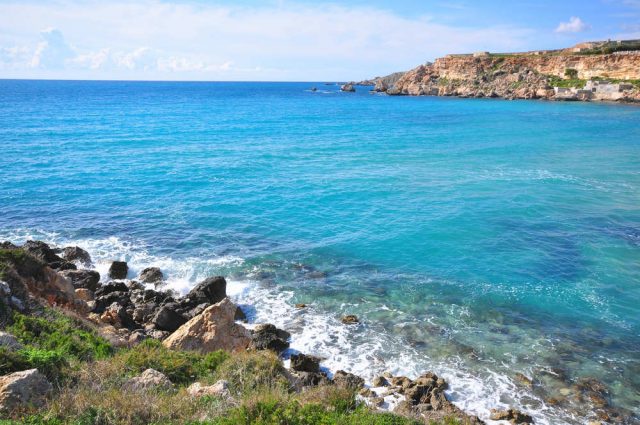
Such a warm Mediterranean doesn't just mean more pleasant water for swimming: it can have significant consequences for the environment, climate, and human activities. The Mediterranean is warming rapidly, and marine heatwaves have become more frequent and intense. With inevitable consequences:
-
- Damage to marine fauna
High temperatures can cause mass mortality of organisms such as sponges, corals, mollusks, and other invertebrates. Furthermore, many Mediterranean species are moving northward, while species more accustomed to warm waters, including some tropical species, are arriving. - Alteration of ecosystems
As the species present change, the food chain also changes: this can alter the availability of food for fish, seabirds, and other animals. Ecosystems can therefore become less balanced and less biodiverse. - Fishing problems
The movement of fish to cooler waters can reduce the presence of some species in areas traditionally exploited by fishermen. The IPCC predicts a decline in fishing potential in some parts of the western Mediterranean in particular. - More violent rains in certain situations
A very warm sea provides more heat and humidity to the atmosphere. This does not necessarily mean more rainfall overall: the Mediterranean is in fact destined to become drier on average. However, when certain disturbances arrive, the energy and humidity available can contribute to very intense precipitation and therefore to cloudbursts and flash floods. - Warmer on land too
The sea accumulates enormous amounts of heat and can contribute to maintaining high temperatures, especially at night and in coastal areas. This can exacerbate heat waves. The parameter is this: in the past, hot summers reached 26-27 degrees Celsius; today, with the same weather patterns, temperatures reach 27-30 degrees Celsius, and heat waves exceed 30 degrees. - Increased risk of algal blooms and other problems
Warming seas can promote certain algal blooms and, together with oxygen loss and pollution, increase stress on coastal ecosystems. - Consequences on tourism and the coasts
When warming is combined with rising sea levels, erosion, and extreme weather events, the risks to beaches, infrastructure, and tourism activities increase.
- Damage to marine fauna
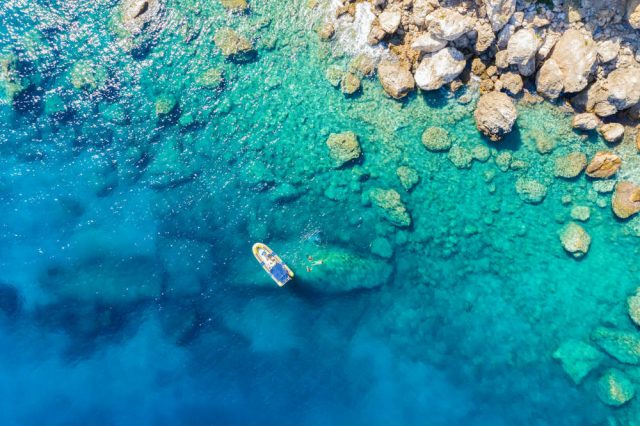
The biggest problem is that the warm Mediterranean can create a ripple effect and favor, for example, violent storms in Calabria, Italy.
The process is favored by two contemporary phenomena: thermally sensitive Mediterranean species have more difficulty surviving, while species from warmer regions find increasingly favorable conditions.
This is why scientists are talking about a true "tropicalization" of the Mediterranean . For the future, the expected trend is for the Mediterranean to continue warming in the coming decades, although this does not mean that every summer will necessarily be hotter than the previous one. The warming will occur along an underlying trend, which will be superimposed by large variations from one year to the next.
In particular:
- Average sea temperatures will rise further. IPCC projections indicate a warming of Mediterranean surface waters which, depending on the climate scenario, could reach several degrees by the end of the century.
- Marine heatwaves will become more frequent and intense. This is probably one of the most worrying aspects: periods with exceptionally warm seas could become much more common.
- Ecosystems will undergo a transformation. Species that require relatively cool waters will be penalized, while thermophilic species will increase, including species from warmer areas.
- Warm seas don’t just mean “more storms.” It can provide more energy and moisture to the atmosphere, contributing to extremely heavy rainfall under certain conditions; at the same time, the Mediterranean is expected to become drier overall.
- Fisheries and biodiversity will be increasingly under pressure, especially if warming is combined with acidification, oxygen loss, pollution and overfishing.
Of course, as the IPCC scientists themselves state , we are not facing a completely inevitable fate: the extent of warming will depend greatly on future emissions. The IPCC clearly shows that limiting global warming also reduces the intensity of changes in the Mediterranean.
Read also:
Want to see a selection of our news?
- Sign up to our newsletter clicking here;
- We are also up Google News , activate the star to add us to your favorite sources;
- Follow us on Facebook, Instagram e Pinterest.