
Index of topics
HOW TO TEACH CHILDREN TO BE AT THE TABLE
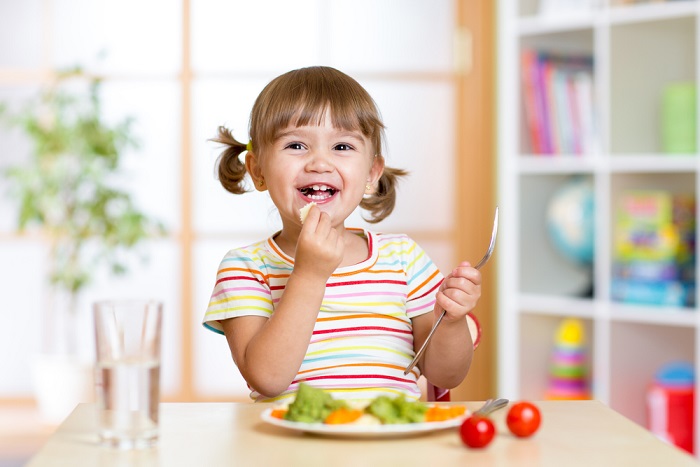
How do we teach children good table manners? And how important are these simple lessons to their development? First of all, let's not become obsessive, let's not revive old tortures (remember when grandmothers forced their grandchildren to eat with books under their arms so they wouldn't raise their elbows?), and let's instead try to anchor good table manners to the meaning and usefulness of the gestures we learn. Simple gestures , like these ten, are also very important for children's futures.
PUNCTUALITY
We go to the dinner table and someone is always missing. When parents aren't setting a bad example, children are the ones who show up late. For the simplest of reasons. Learning punctuality , starting with the time we sit down for dinner, means preparing ourselves from an early age for life's commitments and relationships. And learning to be punctual at school, at work, and for appointments in general. Making someone wait is also disrespectful.
WHEN YOU TALK YOU DON'T EAT
And when we eat, we keep our mouths shut . Aesthetics matter greatly in the manners and quality of relationships. At the table, we begin to understand how the effectiveness of language depends not only on the words we use, but also on how we pronounce them, the tone we use, and the gestures that accompany them. Speaking with your mouth full, before it becomes a sign of impoliteness, is a way of not being understood and listened to.
COMPOSED SEATS
We're not in a classroom, nor in a public park, on the grass. So sitting properly, not swaying, not getting up and down from a chair, not reaching out to others, perhaps to grab a bite of food, are all ways to gain self-control. Precious in any circumstance of life.
TABLE FORMALITY
Magical words that children shouldn't forget at the table when they receive something or make a request. Kindness , the driving force of the world and sustainable lifestyles, comes from a few essential words, from a basic vocabulary. Thank you, please, you're welcome, and sorry.
EAT EVERYTHING ON YOUR PLATE
Avoid tantrums and learn to control your portions. These are small gestures that immediately help you avoid the temptation of food waste, a major scandal for modern man. Furthermore, getting used to varying your diet at the table, tasting everything, helps you open yourself, even mentally, to new things, to curiosity. And to difference.
ASK PERMISSION TO GET UP
There is always an authority in life that must be recognized. A parent, a superior at work, a teacher at school, a priest at Mass. Authority must be respected, without obsequiousness, formality, or excessive subordination. The alternative to authority is anarchy, the antechamber of authoritarianism.
CONVERSATION AT THE TABLE
The table is a unique and unrepeatable opportunity to cultivate the art of preservation , to master this extraordinary tool for communication and connection. Aside from the politeness of speaking to those sitting next to us, it's through conversation at the table that children can learn to engage with others, without being trapped by technology. Conversation never makes you feel alone, and sooner or later, each of us is forced to deal with loneliness.
COLLABORATE TO MAKE ORDER
When you visit a home without staff , you need to help keep order at the table, without embarrassing the hosts. A helping hand brings the dishes to the table, passes them around, and clears the table. Here, too, the lesson is far-reaching: an exercise in the ethics of togetherness and cooperation.
DON'T OVERDO THE PRANKS
Children tend to throw food at the table, jokingly. Of course, we're not talking about a criminal offense, just a bad habit. Let's try to break it down with a few simple arguments: it wastes food , it creates an unfun mess. Where's the fun in that? All of this, taken together, leads to another life lesson: every prank has its limits. First and foremost, good taste.
THE SWEET PRIZE
Beware of obsessing children over super-natural, healthy, and obese diets, as if they were already old. They're old enough to enjoy the pleasures of sweets . And to learn the ancient Latin lesson, "a little, but of everything." A key to good behavior, receiving a reward, and enjoying life's pleasures with a clear sense of proportion. Without it, pleasure becomes waste and dissipation.
NO SMARTPHONES ON THE TABLE
Sign up for our newsletter to stay up-to-date. Click here!
RECIPES FOR CHILDREN:
- Apple Chips: The Perfect Snack Recipe to Entice Kids to Eat Fruit
- Homemade ice cream biscuit: the recipe for kids' favorite snack
- Fried pumpkin: a tasty recipe, perfect for convincing kids to eat their vegetables.
Want to see a selection of our news?
- Sign up to our newsletter clicking here;
- We are also up Google News , activate the star to add us to your favorite sources;
- Follow us on Facebook, Instagram e Pinterest.