
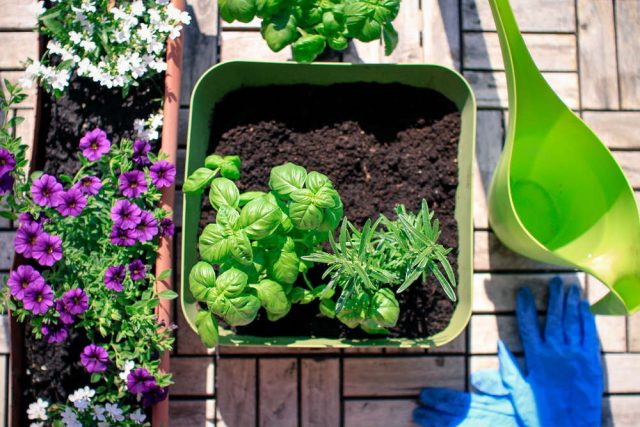
It's not true that a vegetable garden can only be created with large spaces. Gardens and terraces. Even a small balcony can be well-tended, especially with vegetables, and provide the great satisfaction of eating your own locally grown produce. All you need to do is choose the right soil and seedlings, plant them carefully, and consider the balcony's exposure and light when selecting vegetables. And you can even create a hanging garden at home.
Index of topics
10 tips for growing a vegetable garden at home
To create a home garden without wasting money, and with the certainty of good results, there are a few things to keep in mind. Here are the 10 essentials:
- Buy already grown seedlings Transplant into large pots. The size of the pots should be proportionate to the size of the vegetable you are growing. Zucchini, for example, grows in pots 50/60 cm in diameter and 40/50 cm high. Lettuce, celery, chicory, and many aromatic herbs can grow in pots 30 cm in diameter and 20 cm high.
- Always start with short-cycle vegetables Or start with the simplest aromatic herbs. If you love flowers, choose vegetables and fruits that flower or are decorative, such as chili Peppers, the chard, the strawberries, the cherry tomatoes.
- The seedlings already grown they can be transplanted from the end of March to the end of April.
- As regards the soilDon't buy cheap ones, because quality is everything here. The soil can be traditional, pre-fertilized, or pre-fertilized organic soil. The pots should be prepared with expanded clay or gravel at the bottom. Add coarse-grained sand to the soil. The sand, which should make up about 10% of the total, drains easily.
- To grow well, plants need their own living space.So, leave at least 70 cm of space between zucchini plants, for example, at least 40 cm for tomatoes, and 25 cm for lettuce. Therefore, find out how much space should be left between plants depending on their species.
How to get started
The first thing to do is understand what's needed. There are three essential conditions for growing a vegetable garden indoors: the first is sunlight. The source of direct sunlight will determine where, when, and what we grow. The second is water: a location with constant humidity is best, and watering more frequently and with less water is recommended. Finally, the third is soil or compost: it must be fertile, adding fertilizer when necessary. If soil isn't available, containers can be used.
DIY home garden
A DIY garden should be tailored to the space available. This applies to the seedling transplanting method, the possible alternative use of box growing, and watering.
- When you transplant the seedlings, water them well and then wait until the soil is dry before irrigateThe hotter it gets, the more watering you'll need, especially at the edges of the pot and not directly at the roots. Water at dusk so the plants have all night to absorb the water, which evaporates quickly if it hits the ground in full sun.
- If your balcony is flooded with light all day, you can plant any variety of vegetables; otherwise, just plant valerian, chicory, cabbage, chard, parsley and all those plants that don't need a lot of light.
- If your balcony is located on a busy city street, cover the pots with a "non-woven fabric" (TNT) which will prevent fine dust from settling on the plants, while still allowing the sun and water to filter through. Obviously, wash the vegetables well with the sodium bicarbonate when they are ready to be consumed.
- If you need spaceA good solution is a box garden. You can easily create one by recycling a fruit crate and filling it with soil to plant your plants. Use jute fabric instead of plastic, and you'll see that you can achieve great results in a small space.
- To water your vegetable garden at home Always favor certain times of day. Very early in the morning, or at sunset. With the sun now down, the water has plenty of time to be absorbed by the plant during the night. Don't water by pouring water over the plants, but rather by starting from the bottom, from the roots. From this point, the water will rise without the risk of creating thermal shock.
How to choose containers
What to grow
If you're an experienced grower , you can start from seeds: you'll have the advantage of being able to follow the plant's entire life cycle, have more variety, and save money. However, it's more difficult to achieve results and increases the likelihood of pests attacking the plants.
If you're a beginner , however, we recommend starting with seedlings: the plants will be more resilient and will be easier to grow. You might also consider a synergistic garden , an excellent green alternative. Now let's look at the most suitable plants for a home garden.
Radish
This plant is very easy to grow. It doesn't require any special care or soil; it just needs regular moisture, although the flow may not be abundant.
Lettuce
A classic that shouldn't be missing from your garden. Lettuce requires plenty of water and fertilizer, but it's easy to grow.
Spinaci
To ensure a constant supply of iron, spinach should be watered sparingly but frequently: the soil must be kept moist. It has a particular need for nitrogen, so fertilizing the soil before planting is recommended.
Onion
Another classic, easy to grow. It requires no special care or soil. The same goes for shallots, which have a slightly more delicate flavor.
Herbs
Basil, rosemary, oregano, parsley—there are many aromatic herbs you can grow indoors. Just avoid placing them near windows during the coldest times of the year.
Garlic
Garlic can also be grown dry , without the need for irrigation.
Potato
Yes, potatoes can also be grown indoors in convenient jute bags. Just make sure they're placed in a well-lit, spacious spot because they grow quite quickly.
How to make compost
Home composting helps reduce waste while providing natural nutrients to plants, without the use of fertilizers. In essence, you eliminate two types of waste in one fell swoop. When composting at home, avoid only certain food scraps: meat, dairy products, and fatty products.
The importance of the garden from ancient times to today
The garden has always been fundamental to domestic life, even in ancient times. The philosopher Francis Bacon said that "God created the first garden." And for Cicero, "aside from a library, there always needs to be a garden and a vegetable garden." Here you'll find the most intense connections between gardening and great historical figures, along with a recommendation for a must-read book on the subject.
Work in the garden month by month
For those who grow vegetables, there's not a month without some work to do. Every month there's fruit or vegetables to harvest, but also something to plant. But there's also some work to do. Let's see what jobs need to be done in the garden, month by month:
- Gardening in January: What to Sow and What to Harvest
- Vegetable Gardening in February: Sowing and Harvesting
- Vegetable Gardening in March: What to Sow and What to Harvest
- Gardening in April: What to Harvest and What to Sow
- Vegetable Gardening in May: What to Sow and What to Harvest
- Vegetable Gardening in June: What to Sow and Harvest
- Vegetable Garden in July: What to Do
- Vegetable garden in August: sowing and harvesting
- What to plant and harvest in September
- Vegetable Gardening in October: What to Sow and What to Harvest
- Vegetable Gardening in November: What to Sow and What to Harvest
- Garden work in December: sowing and harvesting
Read also:
- Growing cucumbers in the garden, on the balcony, and in a pot
- How to grow onions, even in pots
- How to grow courgettes
- How to grow eggplants in pots or in the garden
- Tomatoes: How to Grow Them in the Garden and Pots
Sign up for our newsletter to stay up-to-date. Click here!
Want to see a selection of our news?
- Sign up to our newsletter clicking here;
- We are also up Google News , activate the star to add us to your favorite sources;
- Follow us on Facebook, Instagram e Pinterest.