
Index of topics
PASSIVE HOUSE
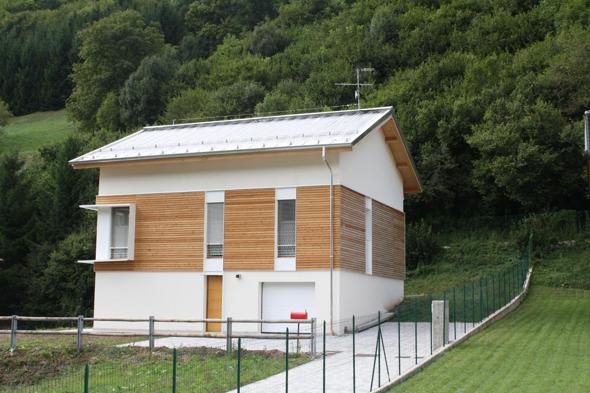
Slowly, even in the face of bureaucratic obstacles and misinformation, Italians are discovering the value and convenience , from every perspective, of the passive house . After Germany, Austria, Switzerland, Belgium, and the countries of Northern Europe, we are now: Italians like this type of home, and these constructions, which can be made of various materials , are multiplying. Even in the absence of a precise census, which has yet to be completed, and without distinguishing between perfectly certified and passive ones, the most energy-efficient and energy-saving homes are thus entering our lifestyles and our residential aspirations. But let's take a closer look at how passive houses work, what advantages they offer in terms of reducing energy costs and eliminating waste, and where we can find models that everyone can consider to realize their dream of a super-sustainable home.
READ ALSO: Passive house, here's the Asti villa without radiators or air conditioning
WHAT IS A PASSIVE HOUSE?
There are currently 50 certified Passive Houses worldwide . Not enough, certainly. And in Europe, they're distributed as follows: 7 in Germany, 4 in Austria, 3.500 in France. However, their prevalence is growing exponentially, partly because, finally, people are realizing that a passive house (or entire building) isn't the exclusive preserve of wealthy clients.
PASSIVE HOUSE: COSTS
Its construction costs are higher than the average for traditional construction, between 6 and 8 percent more, but this expense is amortized in no more than a decade. Furthermore, the passive house not only exploits the sun and natural resources for heating and cooling, but also involves the use of "low-cost" materials, such as wood , which can even lead to savings. It also represents an aesthetic breakthrough, which will not displease anyone: owners and tenants, builders and architects, neighbors and local families.
LEARN MORE: Green roofs, the bonus is confirmed for 2016 as well. 65 percent tax deductions.
ENERGY SAVING PASSIVE HOUSE
Italy, as usual, is navigating the frontiers of change and new lifestyles. Our passive houses are still only a few hundred , concentrated in the North, in Trentino and Friuli Venezia Giulia, but they have also sprung up in Sicily, including in the province of Catania. Yet we have the natural resources to design passive houses, we are a world leader in quality materials, and we have made significant progress in innovation and research in construction.
( Image source : Il Sole 24 ore ).
REDUCED ENERGY CONSUMPTION WITH PASSIVE HOUSES
What's still missing for a driving force is the public sector, which could bet on this energy revolution for its buildings. The numbers are also very important. With passive houses (and buildings), energy consumption is at least 10 times lower than traditional ones . Does that seem like a small amount? There's even a risk that anyone who wants to venture into a "waste-free" home might be getting a great deal: green, the kind truly green and not faked by marketing, is only set to grow. And a passive house can be an excellent investment.
FALSE MYTHS ABOUT PASSIVE HOUSES
IT HEATS ITSELF
Of course not, it doesn't heat itself . But it's designed and built with a strong focus on insulation and the ability to retain heat and prevent it from being lost. This makes heating possible with a minimal heat source, usually with maximum energy efficiency . The same clearly applies to the cooling system. In conclusion, the passive house doesn't heat itself; it heats itself economically, with maximum efficiency, and then retains the maximum amount of heat possible to achieve maximum comfort with minimum expenditure.
IT CAN ONLY BE BUILT IN SUNNY AREAS
No, no, and no. After all, the passive house standard originated in Northern Europe, a region not exactly known for its exposure to sunlight. Energy self-sufficiency of buildings and the use of alternative energy sources like solar panels shouldn't be confused with the Passive House standard. There have been cases of passive houses being transported to high altitudes in winter, proving that environmental conditions are highly relative.
YOU CANNOT CONVERT AN EXISTING HOUSE INTO A PASSIVE BUILDING
This observation is only partially true. It is very difficult to convert an existing home into a new passive house, but significant improvements can be made that significantly bring it closer. One example is the EnerPHit standard – quality-controlled retrofit with passive house components.
PASSIVE HOUSE DOUBLES CONSTRUCTION COSTS
False. In reality, the opposite is true, as the cost of constructing passive house-standard buildings continues to decrease as research and the availability of materials and devices to build them increase. Increasing research into materials, their availability, and construction efficiency results in buildings with an absolutely competitive price.
IN A PASSIVE HOUSE YOU CANNOT OPEN THE WINDOWS
Absolutely false . There are no houses with sealed windows, unless they're called sarcophagi. Windows are perfectly usable, although, obviously, passive houses perform much better with ventilation systems at full capacity. Moreover, even common-sense advice on saving electricity often emphasizes the need to keep windows open for short periods to prevent heat from dissipating.
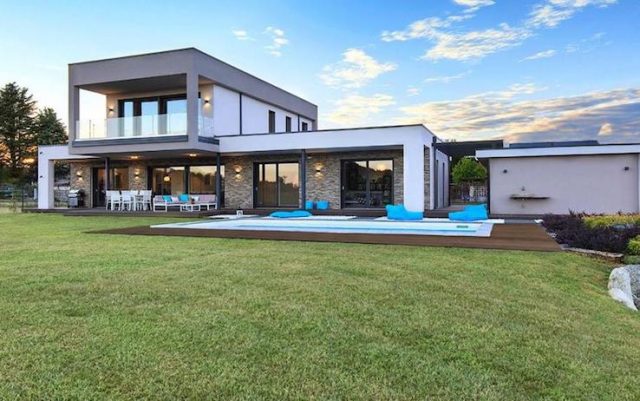
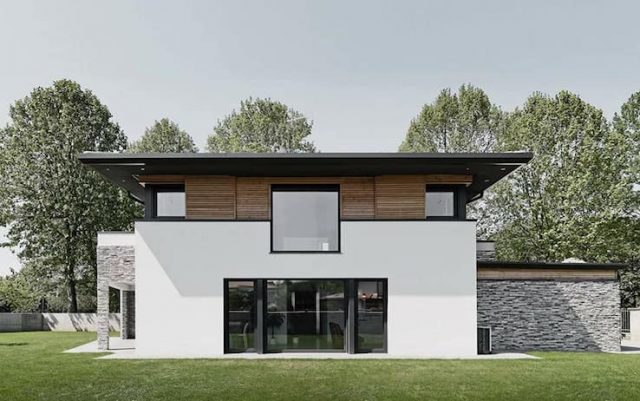
The photos are taken from the Facebook pages of Biohaus – high energy efficiency green building and DomusGaia.
HOW TO REDUCE YOUR ENERGY BILLS:
- Gas and electricity bills can also be cut by making purchases together. Like groceries,
- Electricity costs and bills: 5 simple steps to save and avoid waste
- Green roofs: why they're worth it: lower bills (-25 percent), clean air, and less noise.
Want to see a selection of our news?
- Sign up to our newsletter clicking here;
- We are also up Google News , activate the star to add us to your favorite sources;
- Follow us on Facebook, Instagram e Pinterest.