
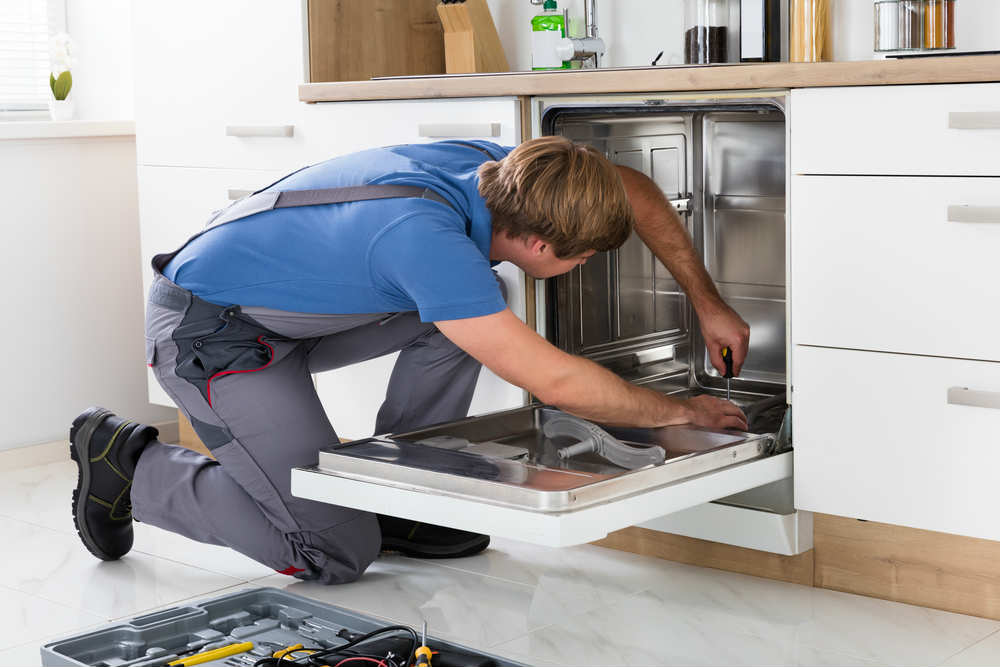
Did you know we can repair your dishwasher? alone? Although it may seem intimidating, the dishwasher is ultimately an appliance that we can repair on our own, and understanding how it works will help us fix it properly safe and risk-free. Here 5 problems municipalities and the Industrial to solve them with a little DIY. Saving money and having fun.
Index of topics
Float stuck
Splaced in the dishwasher basket, the floating group It is a disc-shaped device that rises as the water rises. When the water reaches a certain height, thefloat switch signals the dishwasher to stop adding water. If the float does not move or the sensor It doesn't work, the water will continue to rise until it drains. You may need to replace the float or adjust the water level sensor.
How to fix
Often a float bloccato It is adjusted by raising and lowering it a few times. The float must move freely in order to activate the lock switch. flow of water. If this does not happen or if the float is visibly damaged, it is time to replace the entire floating group.
Leaky door
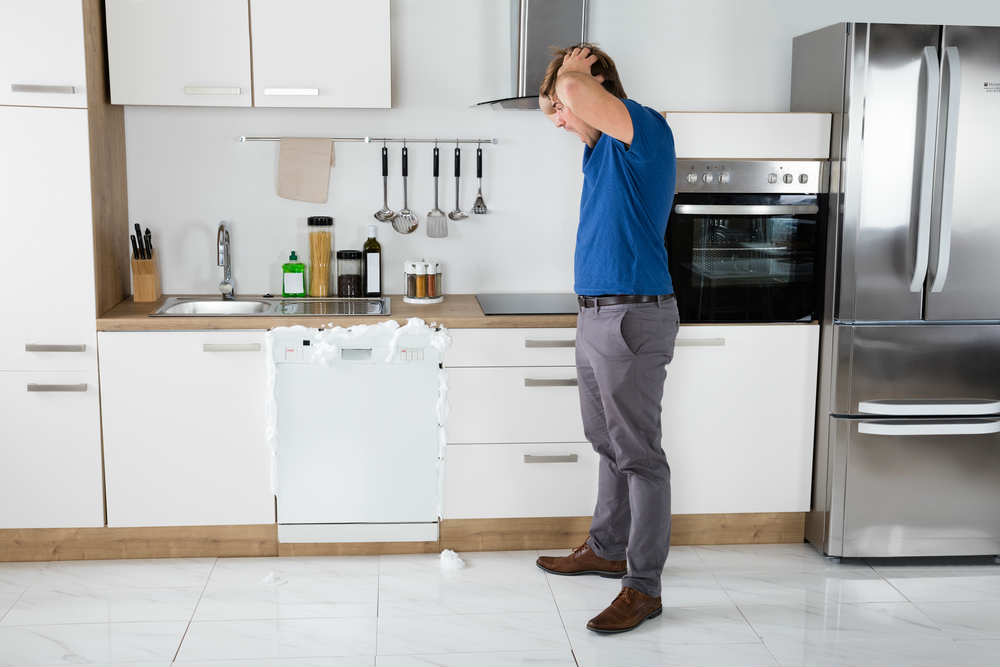
If the water drips from the bottom or from the sides of the dishwasher door, most likely the gasket The tailgate is no longer working properly and needs to be replaced. front office It may leak even if the machine is working well or it may leak in conjunction with overflow problems.
If the door leaks every now and then, it could be because the machine has been loaded incorrectlyLarge dishes placed in the lower part on the sides could to prevent imperceptibly the chiusura of the door. As a result, water may leak out. You should load the large dishes further back, far from the counter. Another hypothesis could be the gasket deterioration The tailgate seal degrades over time, so it needs to be replaced occasionally. Located on the body of the car (not the door), it's inexpensive and easy to replace.
How to fix
To replace the tailgate seal, spread it out carefully pressing from the top and continuing downwards on the left and right sides. Sometimes it could also simply be dirty, can be cleaned with a gentle mixture of dishwashing liquid and warm water, as debris prevents the gasket from adhering. Let it dry using a hair dryer with cold air.
Slow or blocked drain
Your dishwasher may be draining slowly or even clogging. This doesn't necessarily mean something needs replacing, but it could be a simpler problem to fix.
How to fix
- Let's look at the first kitchen sinkThe sink and dishwasher share a drainage system. If the dishwasher drain is clogged, the sink may be clogged too, and we'll check that the drainpipe of the dishwasher (a corrugated plastic tube) it is not twisted.We then check the dishwasher drain filter and clean it by eliminating any residues. If there are none residue visible, we extract the filter cage By removing two screws from the top of the cage, we can clean it more thoroughly.
- Turn off the dishwasher. Locate the plastic drain hose attached to the back. Let's take it off and blow into itIf the air doesn't flow freely, the tube is blocked. Let's try to unblock it with running water in a sink. If the blockage is difficult to remove or the tube appears damaged, all that remains is to buy a new one.
Dishwasher that doesn't wash
It can be frustrating to run your dishwasher on complete cycle, to then discover encrusted food or other stainsIf the dishwasher does not need to be replaced, let's try cleaning the spray arms which may have become clogged by limescale. Limescale is undoubtedly one of the main causes of inefficient dishwasher operation: this is why it is important to perform proper maintenance and clean it frequently. Use vinegar and lemon.
How to fix
We remove all the spray arms and soak them in vinegar to remove limescale deposits. Or we can see if the spray arms need replacing. water inlet valveThe process is a little more cumbersome, but with patience and a good video tutorial, everything is perfectly doable.
Dishes that don't dry after a full cycle
La resistance shaped Horseshoe on the bottom of the machine, is responsible for drying operations. It is relatively inexpensive and is easy to replaceDishes that don't dry are a fault that can also be caused by something very simple: they have been placed incorrectly inside the dishwasher, and the spray arms are hindering their operation.
How to fix
To replace the resistor, the first thing you have to do is turn off the machine, then locate on the back the two threads which connect to the resistor terminals and to leverage gently on them with a flathead screwdriver to free them. We place the wires on the floor, noting their positions (left or right). With a key, unscrew the two locking nuts in plastic bags. Sizes can vary, but typically a 7-10 cm wrench. Now let's open the door and we remove the lower basket.
Let's extract the resistance, and since we've already loosened it from the back, it's just a matter of lifting it up. To reassemble it, we proceed by following the steps in the opposite direction, carefully tightening the nuts to avoid breaking them.
Read also:
- Things not to put in the dishwasher
- How to clean the dishwasher
- Homemade dishwasher tablets
- How to save money with the dishwasher
Want to see a selection of our news?
- Sign up to our newsletter clicking here;
- We are also up Google News , activate the star to add us to your favorite sources;
- Follow us on Facebook, Instagram e Pinterest.