
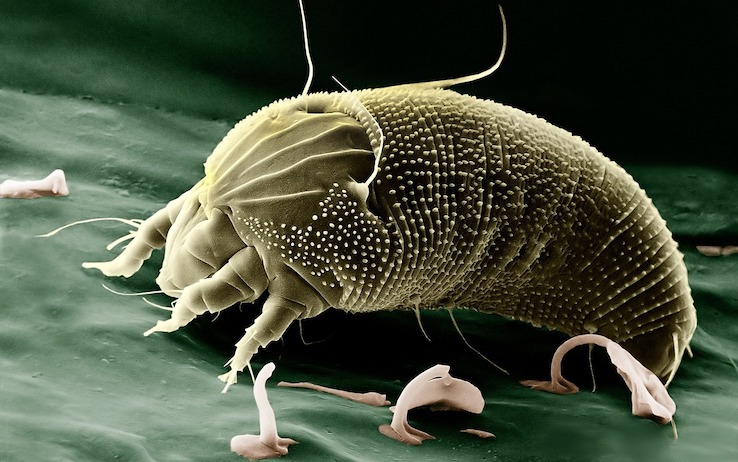
Dust mites cause a lot of damage, from allergies to the dirt they spread. But they can be fought easily and without wasting money on unnecessary purchases . For example, keep your home temperature no higher than 22 degrees Celsius, with humidity below 50 percent. Also, ventilate your home well, especially in winter; don't dry linens indoors; and clean wool mattresses and pillows regularly.
Index of topics
How they arrive
Dust mites love warm, humid climates. They feed on flakes of skin, dandruff , and hair. They can nest anywhere in the home: mattresses, sheets, blankets, pillows, carpets, and curtains. Dust mites cause a specific form of allergy, and half of people who suffer from them are also at risk of asthma. Dust mites are among the most widespread allergens in the world , especially in homes, schools, offices, and even on buses. They can cause a very common respiratory allergy (30 percent of European citizens are sensitive to dust mites).
Their ideal environment is temperatures around 25 degrees Celsius and humidity above 50 percent. Aside from temperature and humidity, the main cause of dust mites is poor hygiene and prophylaxis in the home. This can also be due to simple bad habits, such as keeping windows closed and not ventilating rooms, or using air conditioners to cool rooms when temperatures are too low or the filters are not clean. Dust mites are not seasonal and can strike any time of year, although their activity is reduced in summer as people spend more time outside and homes are better ventilated.
Dimensions:
Dust mites are tiny, which makes them even more offensive and insidious . These tiny insects measure between 200 and 400 thousandths of a millimeter . Therefore, they are invisible to the naked eye and can only be seen with a magnifying glass or microscope.
Natural remedies to keep dust mites away
There are some very useful natural products for keeping dust mites at bay.
- Neem oilJust a few drops, diluted in water with lavender, spray on beds, sofas, and curtains. The important thing is to let it work. for about thirty minutes.
- Tea tree oilYou can add it directly to your laundry or use it with a diffuser in the room where you are concerned about dust mites.
- Essential oilsOther essential oils that work against dust mites include cedarwood, eucalyptus, and peppermint.
Dust mite allergy
The parts of the mite that cause allergies are the feces and the digestive enzymes that primarily affect the allergic person's mucous membranes. The symptoms are clear.
- Cold, with sneezing and a runny nose.
- Tearing and itchy eyes
- Rhinitis, or nasal obstruction and discharge
- Conjunctivitis allergic
- atopic dermatitis which particularly affects adults
Diagnosing dust mite allergy
A surefire way to diagnose a dust mite allergy is to undergo skin prick tests . These are performed by inoculating the skin with allergens. If the skin becomes inflamed with red spots within 15-20 minutes, it indicates a significant skin sensitivity to dust mites. If you're unsure, you can supplement skin prick tests with specific blood tests, particularly a molecular allergy test.
Prevention
Preventing dust mite attacks, with the resulting risk of allergies, involves a series of simple measures in home furnishings and hygiene.
- Use cushion covers and mattress covers that have an anti-mite function
- Reduce the use of carpets, rugs, wallpaper, heavy curtains to what is absolutely necessary. These are all elements that can encourage the proliferation of mites.
- Air out always all the rooms of the house, during the day and even in winter
- Don't let dogs and cats into any room of the house, especially bedrooms. Their dander is a favorite food for mites.
- Prefer water vacuum cleaners that retain even the smallest particles
- Expose mattresses, blankets and sofas to the sun often. pillows
- Make sure that the internal temperature of the house never goes above 20 degrees and the humidity level remains below 40 percent
- Clean floors, furniture, and tables frequently. Even in the kitchen.
- Don't overdo it with stuffed animals and pieced toys in children's rooms
- Always avoid the formation of mold, both on the walls and in areas where food is stored
Read also:
Want to see a selection of our news?
- Sign up to our newsletter clicking here;
- We are also up Google News , activate the star to add us to your favorite sources;
- Follow us on Facebook, Instagram e Pinterest.