

Rain , cold, and meters of snow in the mountains still in late May. This spring, the thermometer is struggling to take off, providing a boost to those who, often maliciously, question the real effects of global warming . The cold , some argue (including, for example, President Trump and some Italian newspapers), is empirical proof of how theories about climate change are a hoax. Unfortunately, the mechanisms triggered by Mother Nature operate with a highly counterintuitive logic , which is why exactly the opposite is true: it's cold , even when it shouldn't be, precisely because of the upheavals affecting our planet.
WHY IT'S COLD
"It's 60 degrees below zero, people can't stay outside for more than a few minutes: global warming, where have you gone? Come back soon, we need you!" A few months ago, the most powerful man in the world, Donald Trump , joked on Twitter, revealing a very worrying truth: the efforts made so far to raise public awareness of the risks we face are still not enough. To combat this skepticism, a rigorous scientific approach is needed to uncover the causes of phenomena that are increasingly impacting our lives. Regarding particularly harsh cold air currents or those that occur during typically warm seasons, several studies demonstrate a relationship between warming Arctic temperatures and meteorological developments in the Northern Hemisphere.
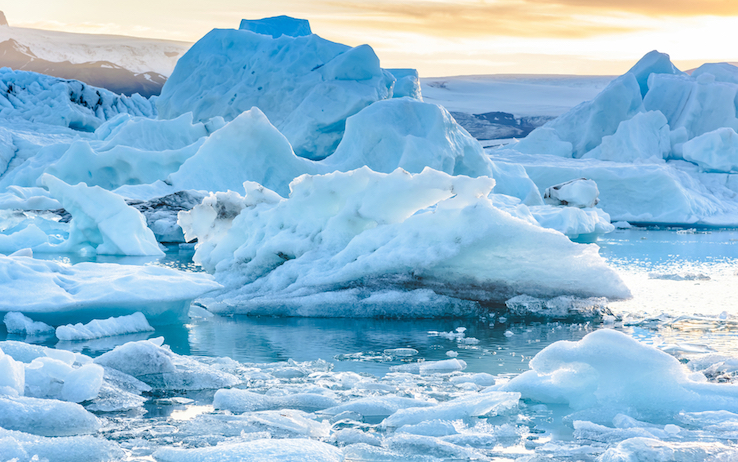
COLD GLOBAL WARMING
Specifically, cold waves are most often linked to an atmospheric phenomenon known as the polar vortex . This consists of a low-pressure area that rotates counterclockwise over the North Pole. The standard behavior of what is technically a cyclone is to tend to stagnate, concentrating its radius of action near the Pole. The high-altitude winds that surround the Arctic manage to retain the coldest air at high latitudes. However, if temperatures rise, causing the ice to melt, the water warms further and therefore evaporates. Once it reaches the atmosphere, the vapor contributes to increasing the humidity level, which, beyond a certain point, contributes to breaking the polar vortex, which begins to expand southward, that is, toward the continent.
COLD ICE MELTING
Furthermore, it must be taken into account that the oceans , when not covered by ice, absorb an enormous amount of heat during the summer and then release it in the winter. This phenomenon, at the Pole, gives rise to a system of warm air that pushes the cold polar air southward. Obviously, the scientific explanations for certain meteorological effects are not limited to these theories but, rather, are defined by a series of converging factors . In general, however, it is undeniable that the constant increase in temperatures, which is nothing other than a greater quantity of energy in the atmosphere, contributes to the unleashing of complex phenomena capable of distorting the meteorological history of entire regions.
DIFFERENCE BETWEEN WEATHER AND CLIMATE GLOBAL WARMING
Finally, it should be remembered that episodic events, such as a particularly cold May, are considered by climatologists to be meteorological phenomena , which have their scope in a limited moment in time. Meanwhile, global climate change and global warming fall within a more in-depth field of research ( climate ) that examines upheavals that occur over a period of at least 150 years.
THE SMALL AND BIG BATTLES TO SAVE THE PLANET
- Ocean pollution: Slat launches its platforms to eliminate plastic. The Ocean Cleanup project (photos and video)
- How to Avoid Marine Pollution: The Pacific Ocean Is Overrun with Plastic
- Rome, the bike workshop where students learn about environmental respect and civic education (video)
- Save the bag, save the environment. Conai's information campaign aimed at supermarket and large-scale retail consumers.
Want to see a selection of our news?
- Sign up to our newsletter clicking here;
- We are also up Google News , activate the star to add us to your favorite sources;
- Follow us on Facebook, Instagram e Pinterest.