
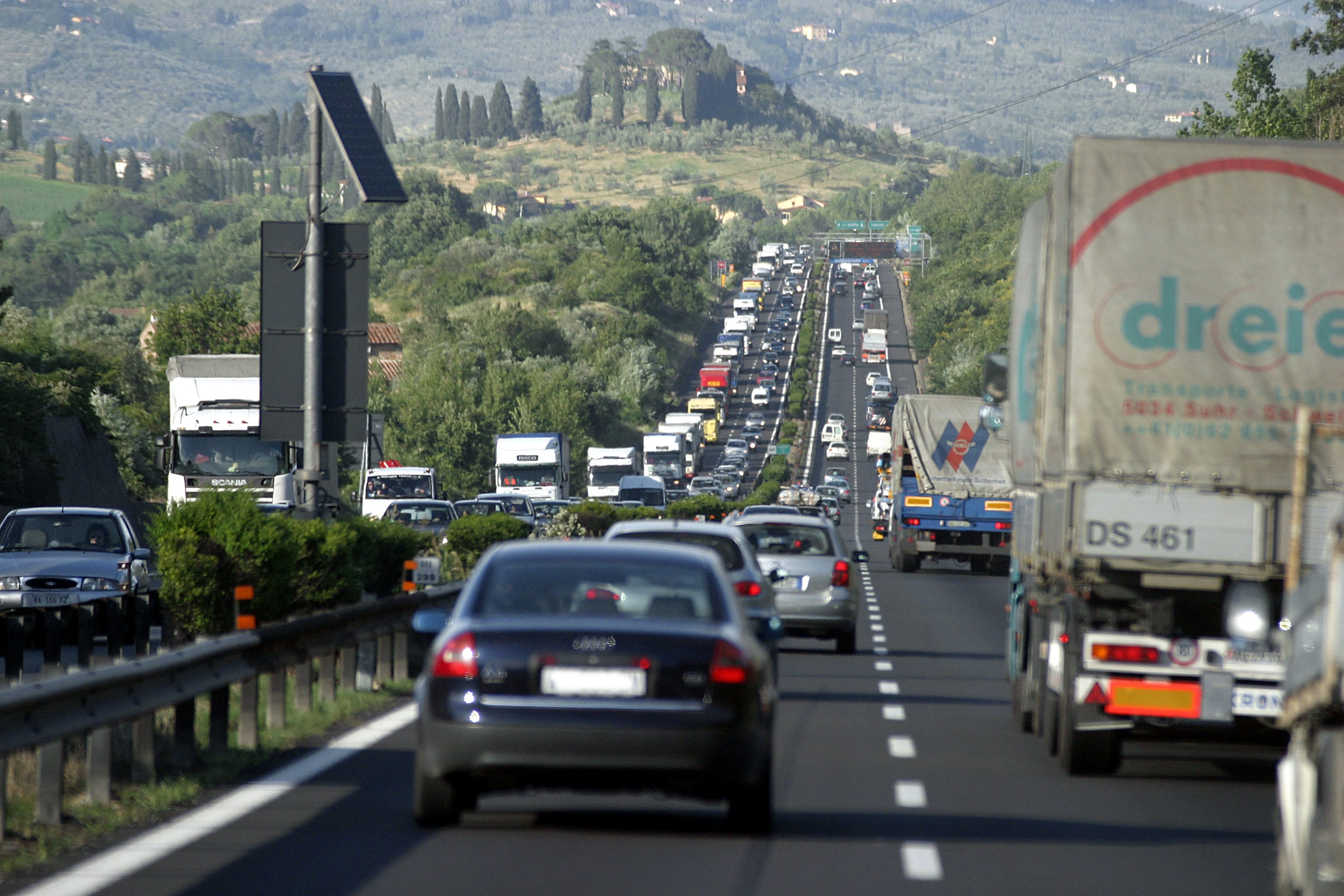
Eight years to build 755 kilometers of highway. Without wasting time and money. Without stealing, without the murky trickery of price revisions , and even closing the construction site several months earlier than planned. More than a symbol of economic recovery and the reconstruction already underway, the Autostrada del Sole was a miracle in itself. A public work of great technological value , admired around the world from the day, October 4, 1964, when the then Prime Minister, Aldo Moro, inaugurated it.
Index of topics
HISTORY OF THE AUTOSTRADA DEL SOLE
The Autostrada del Sole , which celebrated its fiftieth birthday yesterday, was then director general of the IRI. It was here, at Via Veneto 89, where four key figures in the long reconstruction season met almost weekly: the banker Raffaele Mattioli, the president of the industrialists Angelo Costa, the Fiat boss Vittorio Valletta, and the general secretary of the CGIL, Giuseppe Di Vittorio, who entered under the false name of an engineer. And it was here, in the IRI's command center, that a sort of control room for the economic boom was created , where decisions were made that then, quickly, became construction sites. A few months before the Autosole construction work was due to begin, Sernesi summoned Felice Cova to his office, the IRI manager entrusted with the technical direction of the project, which at the time was gigantic in size, stretching 755 kilometers from Milan to Naples , and in cost, 272 billion old lire. " So, engineer, show me the plans..." Sernesi said. "Here are all the drawings, director. Unfortunately, we don't have the money... " was Cova's reply. In real time, the IRI director general made two phone calls, one to Comit (where he could count on Mattioli's support) and the other to Banca Nazionale del Lavoro (led by Imbriani Longo, Sernesi's comrade during the partisan war), and the major loan was immediately granted. The Autostrada del Sole adventure could begin.
READ ALSO: Safe driving, the test that helps us understand our car habits
CONSTRUCTION OF THE AUTOSTRADA DEL SOLE
A vast literature has traced the record-breaking construction of the Autosole motorway, eight years of work and final delivery of the entire project three months in advance, to pressure from Fiat, which needed that long strip of asphalt to sell its cars. machines to all Italians. This is a completely partial truth. Of course: Fiat was interested in an infrastructure that would allow a medium-sized car to cross Italy in just over seven hours, but in reality the Autostrada del Sole was a work of the national systemAn infrastructure of extraordinary value, also on a technological level, which overturned in apublic works two strategic objectives, one of a political and economic nature, and the other of social cohesion. Around that highway, in short, they were thinking on a grand scale. So much so that no Prime Minister shied away, in those years, from cutting a ribbon to inaugurate a section of the route, not as a symbolic and propagandistic gesture, but as an affirmation of the primacy of politics, and therefore of a plan that did not end in the push for a new mobility in the country. Amintore Fanfani, who sculpted the work's deepest meaning ("Now Italy is no longer divided in two"), was matched by the far-reaching thought of Aldo Moro ("the Autostrada del Sole is the symbol of a modern and civilized Italy"). The two thoroughbreds of the DC, who in those years exchanged the baton of government leadership, expressed nothing other than the ambition to represent a country now emerging from the post-war darkness and launched onto a highway, just like the Autosole, of widespread and collective well-being.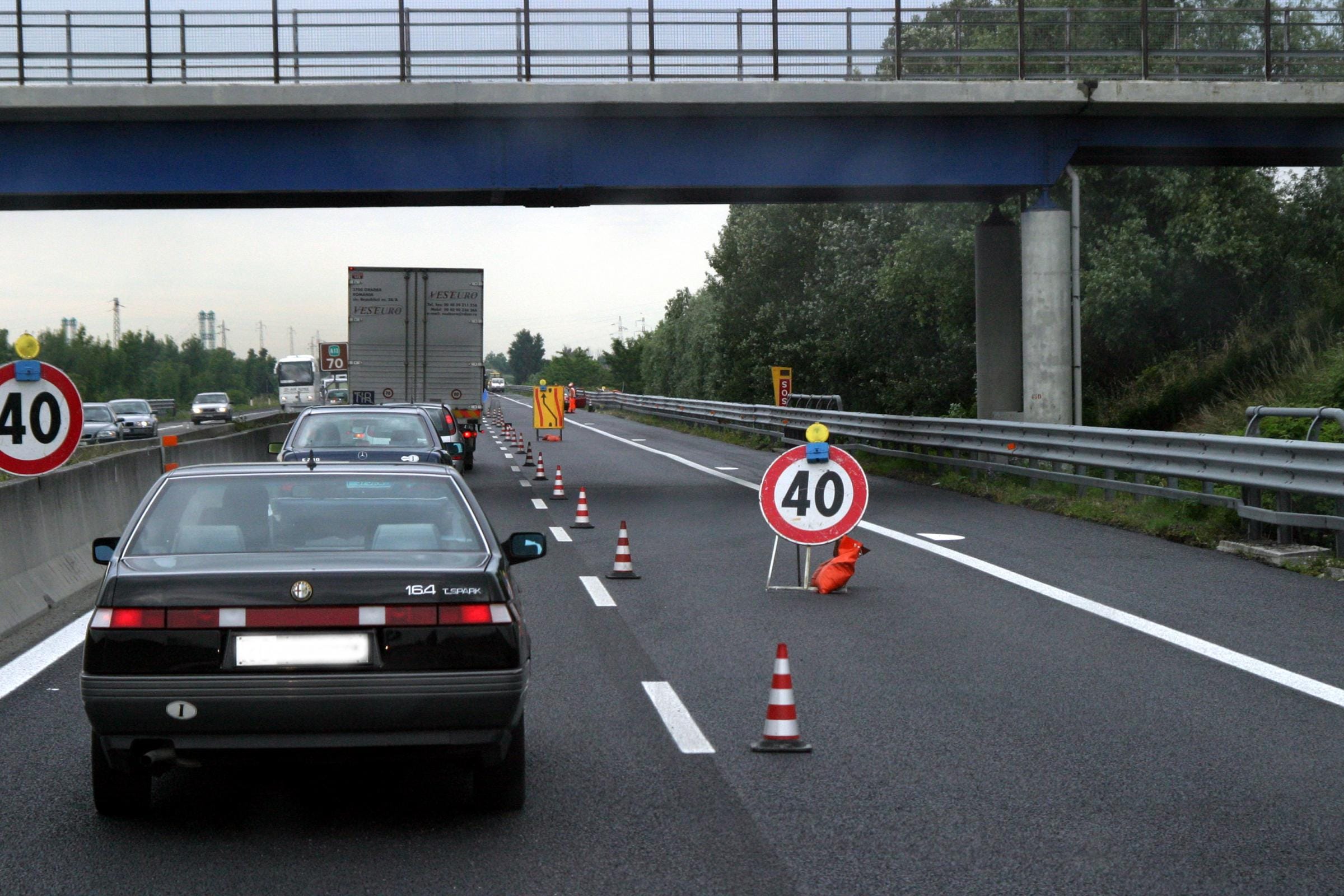
READ MORE: Unfinished public works, a €600 billion waste
AUTOSTRADA DEL SOLE AND ECONOMIC WELL-BEING
Thus, the Autostrada del Sole was not only a masterpiece of civil engineering, admired throughout the world (with 400 bridges and 38 tunnels), paid for with the heavy price of 15 million working days and 74 deaths on construction sites. It was also a Keynesian push to maintain the pace of economic growth , through the lever of public investment , and to give Italians a symbol of the goals achieved. By 1964, we had already shed our skin and our wallets, discovering a range of status symbols of well-being, from cars to refrigerators, from Vespas to Formica kitchens. And we had radically changed customs and lifestyles : a country of former farmers, in 1964, discovered, en masse, the eroticism of toplessness, the pleasure of a jar of Nutella, the energy of Valerio Berruti who became the fastest man in the world. Everything, then, smelled of change. It's no coincidence that just a few months before the inauguration of the Autosole motorway, on November 4, 1964, San Francesco, the Great St. Bernard Tunnel and the Taranto Steelworks had opened, while the Milanese had begun to use their subway . These weren't just coincidences of the calendar, but rather the climate in which the country, despite its contradictions, was immersed. The future didn't scare us; on the contrary, confidence was part of our mentality. Development was a goal we had the strength and desire to continually push forward. And above all, the ruling class as a whole was worthy of great ambitions, not just of a motorway that shed light on the metamorphosis of a people.
WHY IS THE AUTOSTRADA DEL SOLE CALLED THAT?
HOW LONG IS THE VALICO VARIANT?
( Image source: La Presse )
HOW TO TRAVEL BY CAR SAFELY:
- Quitting driving: three reasons to do so when you get older. It's in everyone's best interest.
- Uncivilized drivers, one in three throws anything out of the car window
- Tires and safe driving: never use winter tires in the summer. They waste a lot of fuel.
Want to see a selection of our news?
- Sign up to our newsletter clicking here;
- We are also up Google News , activate the star to add us to your favorite sources;
- Follow us on Facebook, Instagram e Pinterest.