
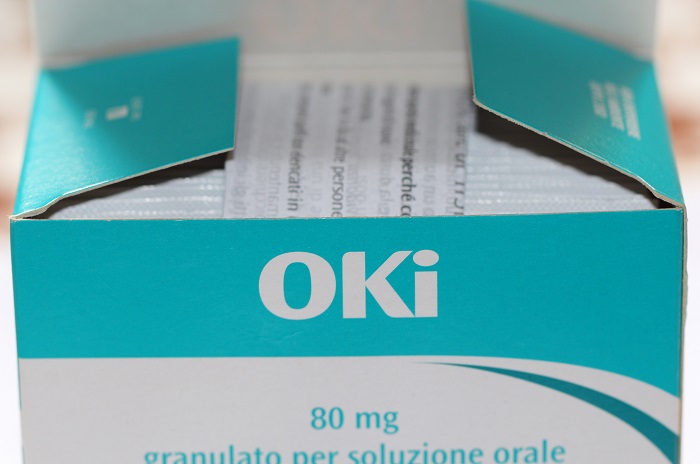
It's the most widely used anti-inflammatory drug in Italy . Fever , muscle aches, women's menstrual cycles, headaches: we all resort to Oki very frequently, and sometimes we risk doing so unnecessarily and wasting it. To get a clear distinction, it's important to first understand the ingredients of this medicine, and then answer a few questions. What does Oki relieve? When should Oki be taken? What are Oki's contraindications? But let's proceed in order.
Index of topics
What is that
Oki "contains the active ingredient ketoprofen lysine salt, which belongs to a group of medicines used to treat pain and inflammation called Nonsteroidal Anti-Inflammatory Drugs," the package insert specifies. It is used to treat inflammatory conditions associated with pain . It is available commercially as granules in sachets to dissolve in water, but also as suppositories and tablets. It is different from the popular Okitask, which is available in tablets and orodispersible sachets.
What is ketoprofen used for?
The drug, as previously mentioned, contains the active ingredient ketoprofen lysine salt, the package insert specifies. And it is indicated " in adults for the symptomatic treatment of inflammatory conditions associated with pain ."
What makes the oki pass
Oki is used, as specified in the leaflet shared by AIFA in the section dedicated to the 80 mg granules, to treat "inflammatory conditions associated with pain" which, in adults, include:
- rheumatoid arthritis
- ankylosing spondylitis
- painful osteoarthritis
- extra-articular rheumatism
- post-traumatic inflammation
- painful inflammatory conditions in dentistry, otorhinolaryngology, urology and pulmonology
In pediatrics it is used for the symptomatic and short-term treatment of inflammatory conditions associated with pain, even those accompanied by pyrexia, such as those affecting:
- osteoarticular system
- post-operative pain
- otitis
Okitask is recommended in case of pain of various origins and natures including:
- headache
- toothache
- neuralgia
- menstrual cramps
- muscle and joint pain
Oki and okitask: differences
Oki and Okitask differ primarily in the concentration of the active ingredient, which is lower in Okitask . Furthermore, while the latter is also sold over-the-counter and available in more rapidly absorbed orodispersible sachets, Oki is usually sold in the form of granules to be dissolved in water. However, it also comes in tablets, sprays, and other solutions.
When should the oki be taken?
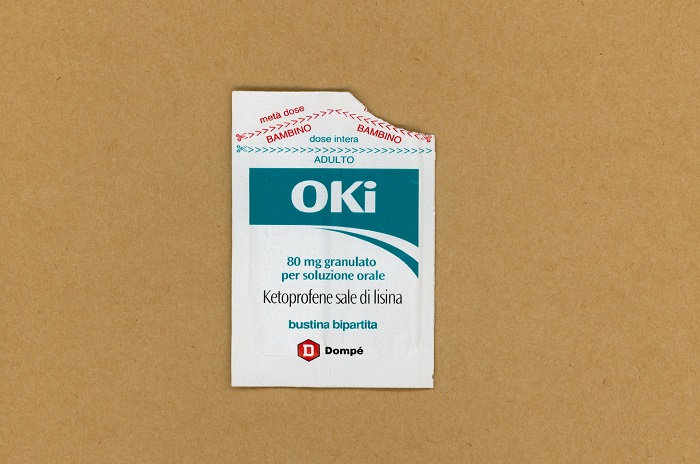
The package insert, in the section relating to Oki 80 mg granules for oral solution , specifies that one 80 g sachet should be taken with meals up to three times a day . A single dose may also be sufficient if the inflammation associated with pain does not require longer treatment. Obviously, your doctor will recommend the dosage based on your condition. It is important to never exceed the doses recommended in the package insert, keeping in mind that they vary depending on age and other factors. And avoid taking it concomitantly with medications listed in the package insert.
How to take Oki
- Oki effervescent granulesThis is the most common form and is usually dissolved in water. Once dissolved, the drug is taken orally.
- Oki in tablets: It is taken orally with a little water.
- Oki gel: it is applied topically to the skin, in painful areas, and is mainly used for the treatment of muscle or joint pain.
Doctors generally suggest using Oki in granular form, dissolved in water.
What dosage should I take Oki?
The package leaflet for the 80 mg granules for oral solution specifies that the dose for adults is one 80 mg sachet up to three times a day during meals: "One 80 mg sachet (full dose) three times a day during meals. The maximum daily dose is 320 mg of ketoprofen lysine salt. Higher doses are not recommended."
For children between 6 and 14 years old, the package leaflet reports the following doses: “half a 40 mg sachet (half dose), three times a day during meals”.
While the dosage for the elderly must be carefully determined by a doctor, as well as for those suffering from specific pathologies, liver failure, or mild or moderate renal failure. It is contraindicated in children under 6 years of age. And Oki 80 mg granules should not be used in cases of "severe liver and kidney dysfunction."
The package insert also specifies dosages for Oki drops, suppositories, and other types. Read carefully, as dosages may vary.
Which pain reliever is better: Oki or Tylenol?
So, as far as pain relief goes, both are good, but Oki, compared to paracetamol, has a side effect that shouldn't be underestimated : it reduces the protective capacity of the stomach mucosa . If taken for long periods or in cases of gastritis , it can cause stomach pain and even ulcers. Furthermore, it has a whole series of other contraindications. Paracetamol is certainly less dangerous.
How long does the effect of Oki last?
Oki is widely used because it is particularly fast-acting and effective. The effect lasts about 8 hours, considering it is taken a maximum of 3 times a day . However, its effectiveness also depends on the type of disorder; for example, in the case of severe toothache, it may not always be enough to reduce the pain. Your doctor will be able to recommend the most suitable medication based on your specific needs.
Controindicazioni
The Oki package insert, from which we report the instructions for the 80 mg granule sachets, specifies that it should not be used in cases of certain medical conditions, including during pregnancy, and at the minimum doses recommended by your doctor in patients with liver failure and mild to moderate renal failure. It should also not be used in patients with severe liver or kidney dysfunction.
It should therefore not be taken in the following cases:
- If it is allergic to ketoprofen, other nonsteroidal anti-inflammatory drugs (NSAIDs), or any of the other ingredients of this medicine;
- if you have one history of hypersensitivity (allergy) reactions such as bronchospasm, asthma attacks, acute rhinitis, urticaria, nasal polyps, angioneurotic edema (swelling of the deep dermis and subcutaneous tissue that may also involve the mucous membranes) or other allergic-type reactions to ketoprofen or substances with a similar mechanism of action (e.g. acetylsalicylic acid or other NSAIDs).
- if you suffer from previous bronchial asthma;
- if you have one severe heart failure (inability of the heart to pump the adequate amount of blood needed for the body's needs);
- if you currently have apeptic ulcer (stomach ulcer) or a hemorrhage, or if you have suffered from it in the past recurrent peptic ulcer or hemorrhage (two or more distinct, proven episodes of bleeding or ulceration);
- if you have had gastrointestinal bleeding, ulceration or perforation in the past or chronic dyspepsia;
- if you have one history of gastrointestinal bleeding or perforation resulting from previous therapy with NSAIDs;
- if you have leukopenia (reduction in the number of white blood cells) and thrombocytopenia (reduction in the number of platelets in the blood);
- if you suffer from Crohn's disease or ulcerative colitis;
- if you suffer from gastritis;
- if you have one severe liver failure (liver cirrhosis, severe hepatitis, reduced liver function) or renal (reduced kidney function);
- if you suffer from hemorrhagic diathesis (predisposition to the development of hemorrhages) and other bleeding disorders or if you have haemostatic disorders;
- if you are following intensive diuretic therapy;
- if you are in pregnancy;
- In children under 6 years of age.
The package leaflet also specifies additional warnings and precautions and a list of medications with which it should not be taken . We recommend that you read all the information provided carefully.
Effetti collaterali
Many adverse reactions are rare when used as directed, but some have been observed with ketoprofen in adults. These are listed in the package insert for the 80 mg oral granules , which are the most commonly used:
- Common: dyspepsia (indigestion), nausea, abdominal pain, vomiting;
- Uncommon: headache, dizziness, vertigo, drowsiness; – constipation (constipation), diarrhea, flatulence (gas), gastritis, abdominal discomfort; – rash, itching; – edema (fluid buildup causing swelling), fatigue, peripheral edema (swelling), chills;
- Rare: Hemorrhagic anemia (anemia caused by blood loss); – paresthesia (abnormal sensation in the skin, tingling); – blurred vision; – tinnitus (ringing in the ear); – asthma; – stomatitis (mouth ulcer), peptic ulcer (stomach or duodenal ulcer), colitis; – hepatitis, increased transaminases (liver enzymes), increased blood bilirubin (elevated serum bilirubin levels due to liver disorders), jaundice; – increased weight.
The package leaflet specifies that “Medicines such as OKi may be associated (especially at high doses and with long-term treatment) with an increased risk of arterial thrombotic events (formation of blood clots in the blood vessels), such as heart attack (myocardial infarction) or stroke (cerebrovascular accident).
In short, it is a drug with several contraindications, best used only when truly necessary.
Where to dispose of OKI sachets
Read also:
Want to see a selection of our news?
- Sign up to our newsletter clicking here;
- We are also up Google News , activate the star to add us to your favorite sources;
- Follow us on Facebook, Instagram e Pinterest.