
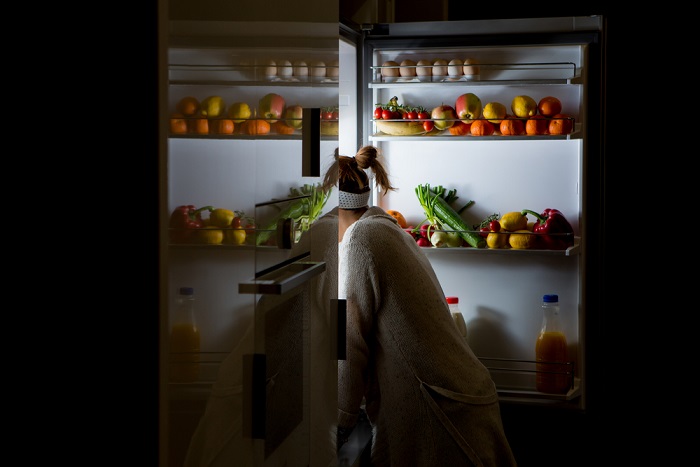
Twelve hoursThis is the amount of time our body needs, after a moderate dinner, to fast overnight and allow our body to fully recover the energy it needs for the next day. Instead, we waste our health, we ruin ourbiological clock and we throw our metabolism into crisis with late-night snacking. We get out of bed, open the refrigerator, and grab some leftovers. Or perhaps it's during the night that we devour, perhaps to... stress., sweets, snacks, chocolate. A poor diet can even put the health of the microbiota at risk, whose fundamental function is to support the immunitary defenseNever as precious as in times of pandemic. During the night our body needs to recover energy And you shouldn't burden it with any kind of food, especially high-calorie foods or snacks. But how can we avoid eating during sleep hours, if we wake up frequently? How do you avoid the risk of becoming a night owl in search of food?

Index of topics
Go to bed lightly and not immediately after dinner
To avoid eating at night, the first thing to do is sleep well, according to a regular cycle, and wake up immediately in the morning. Therefore: light dinnerDon't go to bed immediately afterward, and even just take a short walk around the house or outside to take out the trash or walk the dog. Regular sleep will keep you away from the nighttime temptations that drive you to food.
Control your diet
If you have the habit of getting up at night and emptying the refrigerator, there are two possibilities. A nervous instinct, due to stress, which needs to be addressed as such. Or a problem with poor nutrition during the day, which leaves a gap that needs to be filled at night. Therefore, reconstruct your day at the table and try to understand, perhaps even with... the advice of a dietician, where the mistake you make during the day and then pay for it at night lies. In general, the two possibilities can also be combined, and for this reason we speak of Night Eating Syndrome which combines an eating disorder and a sleep disorder.mood.
If you wake up at night
Everything comes to play in this phase, which, if it becomes recurrent, creates a dependency on nighttime food. You wake up and your first instinct is to go to the kitchen. Take a moment's respite And try not to get out of bed, trying to fall asleep again. Perhaps with a book or a piece of classical music. Absolutely avoid turning on the TV, smartphone, tablet, or cell phone.
Healthy nutrition
If you can't avoid food altogether, at least try to limit it to healthy products. Avoid snacks, sweets, and chocolate. And focus on two foods: dried fruit, which contains tryptophan, which helps your immune system. metabolism, or a banana smoothie, which contains magnesium and vitamin B6. These two things help you fall asleep and relax your muscles. In general, if you absolutely can't resist the urge to eat something, it's always better to choose light fruits (for example, avoid oranges and tangerines).
Drink a lot during the day
If you tend to eat at night, in addition to stabilizing your diet with its cycles, starting with a hearty breakfast, adopt some good eating habits. Drink plenty of water throughout the day, will help you consume fewer carbonated and sugary drinks, tea, and coffee. And focus only on healthy, non-fatty snacks, perhaps with fruits and vegetables. You'll see that over time, this type of diet will make you less likely to crave food at night.
Reduce Stress
As trivial as it may seem, a high level of stress, especially one that's prolonged throughout the day, takes its toll at night. At that point, sleeping well is a mirage, and nighttime cravings are a serious possibility. Remember that one of the simplest and most effective stress-preventing exercises is: yoga, with all its relaxing effects.
Don't talk about food before going to sleep
Try not to do this, especially at night. And also avoid talking about it excessively in the evening, before going to bed. Sitting at the dinner table and talking about food is a way to risk being constantly hungry, even at night.
Brush your teeth well
Aside from the well-known hygiene issues, brushing your teeth well also helps prevent cravings during the night. This is for reasons well-known and studied by experts. The taste of toothpaste It is not compatible with the desire for food, when the mouth is fresh we tend to keep it that way, toothpaste changes the flavor of food which becomes less appetizing.
Food eaten at night is eliminated more slowly.
Any dietitian or nutrition expert can tell you that food eaten at night, outside of normal hours, is the food that causes the most weight gain. Keep this in mind in your lifestyleAnd keep this in mind for your children, too. A study conducted in the United States and published in the journal Sleep health demonstrates the following chain that afflicts children: those who eat poorly and go to bed late are more likely to consume junk food and sugary drinks overnight. And so you become first fat and then obese.
Read also:
- When is fasting good?
- Cosleeping: Why It's Good and When to Stop
- Insomnia: Natural Remedies to Beat It
- The best pillows for sleeping
Sign up for our newsletter to stay up-to-date. Click here!
Want to see a selection of our news?
- Sign up to our newsletter clicking here;
- We are also up Google News , activate the star to add us to your favorite sources;
- Follow us on Facebook, Instagram e Pinterest.