
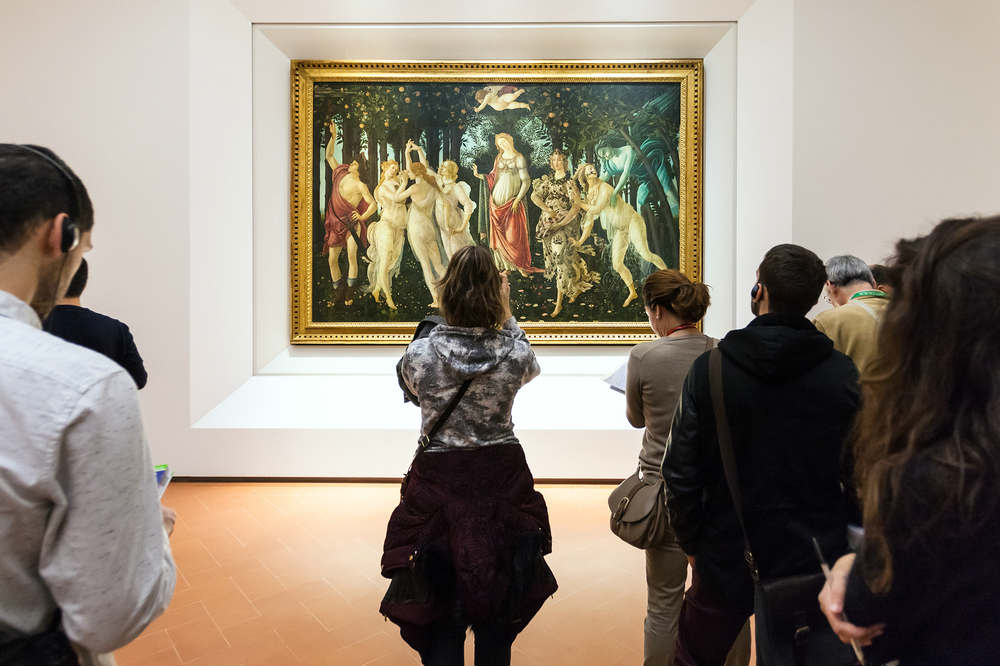
Take your time, and remember that visit a museum or an exhibitionContemplating a work of art, looking closely at the work of a great artist, are life's true pleasures. Don't waste them. And perhaps try to approach the works with a basic understanding of the artist, the period, and the context in which they were created. These things won't hurt and will enrich your approach to art. Eight seconds. This is the average time which we dedicate to theobservation of a work of art: a fleeting glance, as if we were admiring the light of a traffic light, without any real attention to masterpieces that have made the history of art and of man. One waste absolute of emotions, experience, gioia and well-being. All under the sign of the well-known word "hurry“, which as is well explained in the book Prisoners of the present di Joseph DeRita and Antonio Galdo (Einaudi editions), derives from the Latin to rubAnd haste always gets us, even in a museum. They understood this so well in Great Britain that they proposed, with the strength of the group of museums branded Tate, the slow looking, the slow gaze to admire works of art, complete with online guide.
Index of topics
How to observe works of art
But without getting too bogged down in acronyms, even rather formal ones, let's take a closer look at how to visit a museum , at the right times and with the right method . Bearing in mind, as usual, everyone is free to do what they want with their free time. Even to waste it, without truly understanding what they're looking at in a temple of art.
How to visit an art exhibition
Be generous with your time, and don't be anxious, when you decide to visit a museum . Whether small or large, but even more so if it's a large venue or located in a major city. A visit to a museum is always a thrill , not to be wasted, especially when the space is so large that it deserves days (think of the Uffizi, the Louvre, the Prado, or the Vatican Museums, to name just a few). The risk is often that you won't fully appreciate the treasures housed there , wasting too much time in some areas and perhaps arriving tired in others. That's why, to fully enjoy a tour of the world of art, science, or history, it's best to follow a few simple but essential rules . Like these ten we present here.
- Don't arrive without a minimum of knowledge. If you go to a museum with great history and tradition, with many works, the first thing you have to do is get informed beforehand, you were getting ready that is to the visitNothing too academic or demanding, but it's best to avoid entering such a space with zero knowledge.
- The guide of the senses. Skills aside, in a museum you need to know abandon yourself to the pleasure of the senses. To the pure enjoyment of a work of art. Do you like a particular painting? Stop for the time necessary to appreciate it. Are other works of art of no interest to you? Don't waste time looking at everything, as if there were an exam to pass.
- As long as necessary. Haste, anxiety, and stress: these are not good companions for wandering around a museum. You need to take your time, and it's certainly better to stop for even ten minutes in front of a masterpiece that particularly captivates you than to wander around hopping from one work to another for a few moments. In any case, if you're not a regular museum-goer, do not go beyond two hours to complete the visitOtherwise you risk not being able to take it anymore and not coming back.
- A good method of visiting. Always calmly and without worries, a good method to visit the museum is to divide your tour into two partsIn the first, take a quick tour, without lingering too long in front of the individual captions of the works; in the second, however, go directly to the works you want to explore further.
- Select what you look at, even instinctively. Don't be wishful thinking: it's impossible to see all the works in a museum, especially if it's a place of great cultural significance. So, choose, with some good advice, your own ideas, and your instincts. And perhaps reserve the opportunity to return to the site to admire other works. You must also use your gaze to select, that is, to focus your attention on a particular detail of the work. Trust what you feel, the pleasure and desire of an emotion, often just a cliché, rather than what you've heard.
- The choice of guides, individual and collective, and audio. Most museums now offer a wide range of options. From digital to live guides, you're truly spoiled for choice. Always keep in mind, however, that a "physical guide," while somewhat expensive, can satisfy all your curiosities and clarify any doubts.
How to organize a visit to the museum
- How apps can helpEspecially in very large museums, they can serve as excellent digital maps that will guide you through the facility. Furthermore, thanks to apps in many museums, you can enjoy fun games or puzzles that will further enhance your experience inside the facility.
- Light clothingIn both summer and winter, it's always best to enter museums without overloading yourself with clothes. You risk being cumbersome with coats or overcoats in your arms, and that's always an unpleasant feeling, especially in crowded museums. For this reason, always try to take advantage of the cloakroom facilities.
- Pay attention to the refreshment points and the bookshopThe museum experience doesn't end with visiting its masterpieces. Almost all the buildings now have refreshment stands or bars where you can chat with friends and family about what you've just seen. At the same time, it's a shame not to take advantage of the bookstores, where you can often find real gems that are hard to find outside.
- Don't be pushy with your fellow travellersIf your vacation is with friends and family, don't be a dictator when choosing which museum to visit. Share, try to find a place that everyone will enjoy, and don't force anyone. The enjoyment of a work of art or scientific or natural knowledge is a free, individual choice. It shouldn't be considered a law or, worse, a kind of constraint.
- Get the kids involved. If you're with children, however, you need to find the right ways to engage them and make them feel like the protagonists of a museum visit. It's not easy. It requires lightheartedness, smiles, jokes, and possibly some games inside. Even better if you can pique their interest in an artwork with a narrative, a story, or a compelling image.
Slow looking
To prevent rushing to admire works of art, as we mentioned at the beginning, the Tate group in Great Britain has decided to publish its guide to slow looking online . As you can see, the Tate folks follow our suggestions, and if anything, they add a few things we suggest keeping at a distance. For example: spending even 10 minutes in front of a work of art (and this is correct) and setting a silent alarm on your phone with the vibrating sound to remind you of the time elapsed (and this is simply insane). All we need is the anxiety of cell phone vibrations in a museum, when our sustainable lifestyle leads us to the pleasure and emotion of art. The Tate's second bizarre and dangerous suggestion: the museum is "like a menu," meaning it doesn't offer a set itinerary, but should be experienced like a meal at the table, with choices. So, all we needed was museums to make the obsession with food part of our lifestyles: let's just say the Tate's parallel is, to say the least, misplaced.
Museum therapy
Admiring the beauty of a work of art doesn't just produce the sensory pleasure experienced when viewing an artist's work. There's also a therapeutic aspect , hence the discipline of museum therapy, explored and codified in the early 2000s thanks to studies at several Norwegian and Swedish universities. But what are the benefits of museum therapy? According to a study by American Harold J. Dupuy, there's a close correlation between psychophysical well-being and the ability to admire a work of art or, better yet, visit a museum . This contemplation, in fact, can increase the production of dopamine and serotonin , hormones that in turn convey pleasure and gratification. More recent scientific research has also highlighted some benefits of museum therapy for patients suffering from neurodegenerative diseases, such as Alzheimer's . Art affects emotional circuits, more than cognitive ones, hence the beneficial pleasure of a visit to a museum, which is also recommended for people with autism. While museum therapy is being applied experimentally in several hospitals, including in Italy (for example, at the San Raffaele in Milan), there are countries where it is now fully recognized as a medical science. The most notable example is Canada, where it has been officially recognized since 2018 and museum therapy can be prescribed like a drug . Patients are entitled to up to 50 free visits per year to museums, exhibitions, or other museum spaces: alone or accompanied by a healthcare professional. Admission is free, and requires a simple medical prescription.
How do you behave in a museum?
A museum is a temple. It has its own codes, its own rules for visitors, and the spaces that must be respected. For example: don't get too close to the exhibits, don't occupy chairs and sofas in the room, don't enter a museum as if you were at the seaside or the beach, and don't bring dogs or cats. Furthermore, food and water are not permitted in the exhibition rooms. Cell phones and smartphones should be turned off, or at most turned off. If you're visiting with a group, stay close together to avoid creating confusion and disturbing other visitors.
Read also:
- The first environmental crime museum will soon open at Rome's Bioparco.
- Walking among the trees eliminates stress and reduces the risk of depression.
- The twenty most visited museums in the world
- Italian museums: waste and missed opportunities
Sign up for our newsletter to stay up-to-date. Click here!
Want to see a selection of our news?
- Sign up to our newsletter clicking here;
- We are also up Google News , activate the star to add us to your favorite sources;
- Follow us on Facebook, Instagram e Pinterest.