
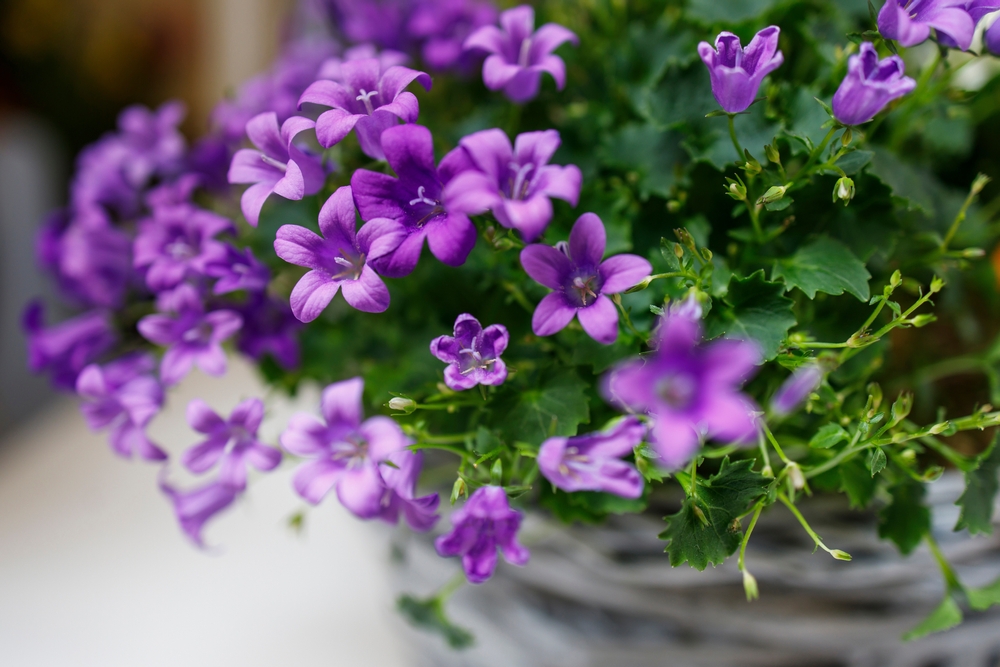
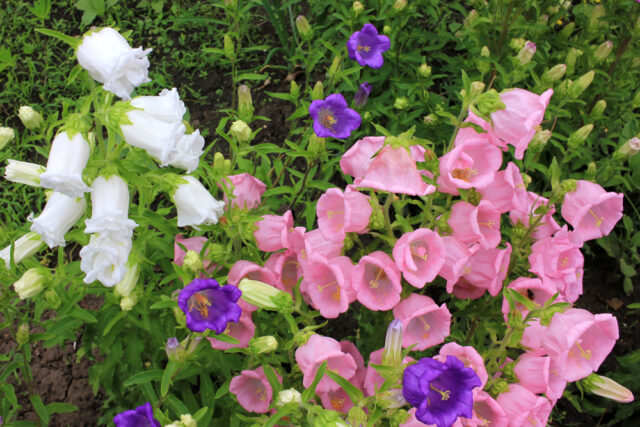
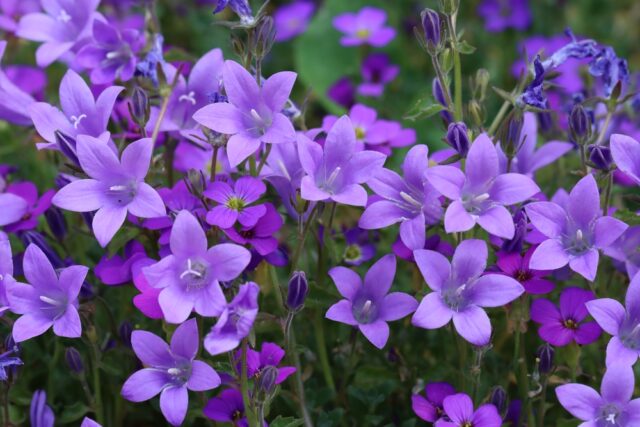
An easy-to-grow plant, with flowers appearing from May to September. A lively, cheerful plant, native to Northern Europe, America, and Asia: the ones we most commonly find in our nurseries come from Mediterranean countries. Among the most prized features of the campanula are its flowers, bell-shaped or star-shaped: they are usually blue or purple, but can also be white, pink, red, and yellow. The delicacy of these flowers is reminiscent of jasmine.
Index of topics
CAMPANULA
The bellflower family comprises approximately 300 species , biennial or perennial, with characteristic bell-shaped flowers of varying colors. The leaves can be heart-shaped, toothed, or oblong-lanceolate, sometimes small, bristly, and rough, depending on the species.
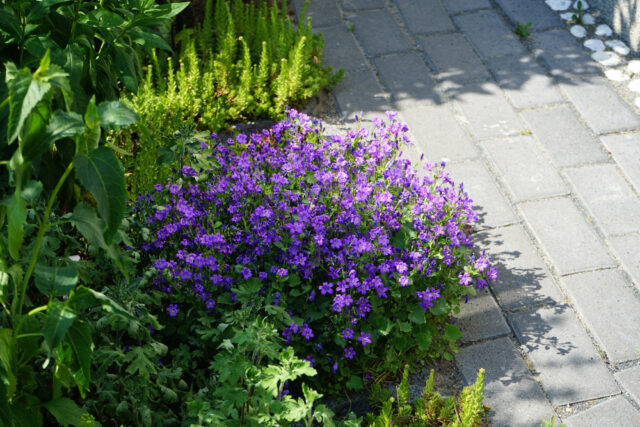
CAMPANULA VARIETY
- Carpathian. It grows up to 60 centimeters tall with flowers in a wide variety of colors: blue, lilac, white, and purple.
- Persicifolia. It grows to over a meter tall and has long, pendulous flowers ranging in color from white to blue.
- Isophylla. This is a very small variety (less than 20 centimeters tall), which grows mainly in northern regions. Its flowers are white, blue, and lilac.
- Garganica. Probably the most widespread variety, with small plants, around 15 centimeters tall. Its bell-shaped flowers are purple and blue.
HOW TO GROW BELLOWBELL
Campanula is a very common plant, even in the wild: it grows in meadows, woods , and cool, shady heathlands. If we grow it in the garden, on a terrace, or on a balcony, the campanulas we use fall into two main categories. The first has a mixed border and is over 30 centimeters tall. The second is dwarf or short, growing well in rocky areas.
READ ALSO: Hydrangeas: How to Grow and Care for Them
HOW TO GROW CAMPANULA IN A POT
Campanula can also be easily grown in a pot , indoors or outdoors. The most suitable pot (ceramic or terracotta) should have a diameter of around 20 centimeters, and 1-2 centimeters of expanded clay should be placed on the bottom of the container . This will greatly help the roots maintain their strength and the plant grow healthily. The important thing is that the potted campanula, whether indoors or outdoors, has good air circulation.
HOW CULTIVATE LA CAMPANULA IN HOME
EXPOSURE AND CLIMATE
Campanulas prefer temperate climates and bright locations , preferably not directly in the sun. They also adapt to a particularly sunny spot. Campanulas are not afraid of the cold, but if summers are very hot and dry, it is best to opt for a shaded location.
SOIL AND CULTIVATION CARE
The ideal soil is moist and well-drained , containing a certain percentage of calcium, and should be fertilized at the end of spring.
FOR MORE INFORMATION: Lavender: How to grow it in pots and on the balcony
WATERING
Bellflowers need constant and frequent watering. In summer, at least every 10-15 days, depending on the general weather conditions. Fertilizer, preferably natural , should be applied to the plants at least once a month.
SOWING AND FLOWERING
Campanulas are propagated by seed in autumn or early spring; they can also be propagated by cuttings in early spring . Flowering occurs from May to September.
PRUNING
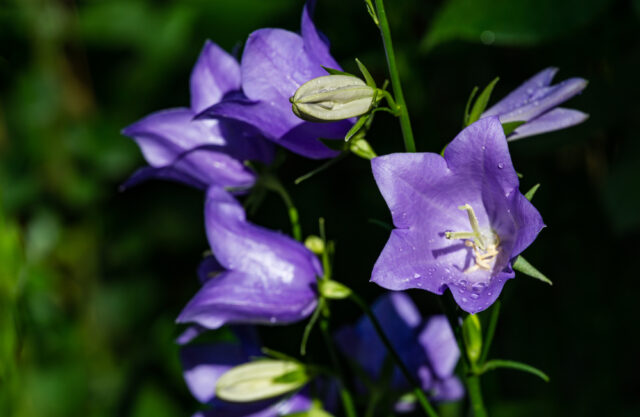
Bellflower pruning should be done with a specific goal: to remove dead or faded flowers, allowing the remaining flowers to grow better. Don't be alarmed if the plant's above-ground parts die back during the winter: they will reappear on sunny days.
PARASITES AND REMEDIES
Bluebells are wary of slugs and snails, which prey on shoots and young leaves. If the leaves turn yellow or dry, water more regularly. If the plant droops, however, it needs less water.
FLOWERS TO GROW IN THE GARDEN:
Want to see a selection of our news?
- Sign up to our newsletter clicking here;
- We are also up Google News , activate the star to add us to your favorite sources;
- Follow us on Facebook, Instagram e Pinterest.