
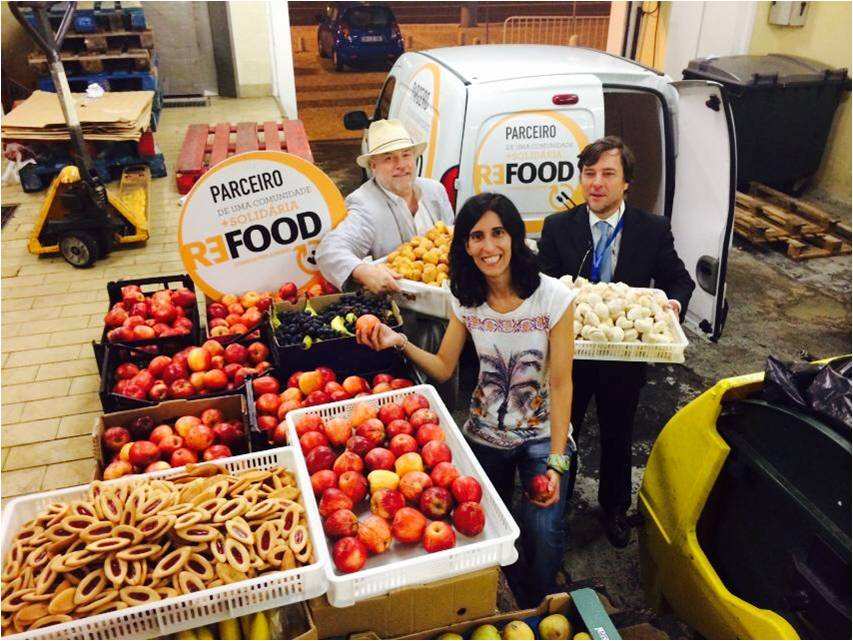
Is it possible that a third of all the food we produce is thrown away? Is it possible that good food is thrown away every day while a large portion of the world's population struggles with food insufficiency? These are some of the questions that the Portuguese creators of the Re-Food project they set out to put an end to the frightening figures of food waste, saving tons of good food.
ALSO READ: Foodbusters: The superheroes of food recovery arrive from Ancona.
RE-FOOD PORTUGAL
Daily food waste, unfortunately, is not only possible, it's our current reality. Therefore, we intend to provide a concrete response: recruiting and organizing hundreds of volunteers to save food, starting from neighborhoods, communities, and the immediate area, donating it to those in need in the same areas where the food is saved, at no cost to the donors given their proximity. A true "neighborhood" food rescue effort that involves all sectors of the community: citizens, restaurants, businesses and institutions.
A grassroots movement that offers concrete support and strengthens social ties: a network mechanism that starts with the people. Volunteers donate some of their time, about two hours a week each, by bike or on foot to bakeries, delicatessens, grocery stores, restaurants, supermarkets, and homes. They collect products that would otherwise become waste, package and package them, and then pass them on to anti-poverty organizations that have joined the program. Other volunteers, organized into teams, meet at the operations center to portion out the rescued food: each packaged, more or less, it can support 8 to 12 people.
TO KNOW MORE: BitGood: the anti-waste app for small businesses that recovers unsold food.
RE-FOOD PROJECT
In the Nossa Senhora de Fàtima neighborhood, 115 businesses have already joined Re-Food, and more than 300 volunteers are out on their bicycles collecting food. In Telheiras, 200 volunteers and 150 businesses have signed up. And so on in ten neighborhoods of the Portuguese capital. Today, there are 25 Re-Food centers operating across the country, where more than 4.000 volunteers save 46.000 meals a month from over 900 partners including restaurants, supermarkets, and farmers, helping 2.500 people, 5 or 6 days a week.
In January of last year, a "copy" of the Re-food project was imported by Stefano Spilotros, a resident of Caravaggio, a town in the province of Bergamo, who approached his fellow citizens to bring the Portuguese food recovery experiment to the area to help families at risk of subsistence in his community. In an interview with Treviglio NewspaperStefano had declared. "For several years," Stefano explained, "I've been in contact with an association called 'Re-Food.' It was founded in Portugal but has been operating in Italy for a couple of years now, in Bari, Milan, and a few other places. I'd like to bring it to Caravaggio as well. The goal is to redirect "leftover" food from restaurants, soup kitchens, shops, and supermarkets and redistribute it to people in financial difficulty."
(Featured image from the Re-Food portal // Phocredits: Refood.org)
STORIES AGAINST FOOD WASTE:
- In Norway, a supermarket chain is trading in unsold food, saving 4500 tons of it from the garbage each year.
- In Leeds, a supermarket sells unsold food, saving 6 tons of still-good food every day.
- Recovery Times: In Faenza, innkeepers and housewives dream up gourmet dinners made from leftovers.
Want to see a selection of our news?
- Sign up to our newsletter clicking here;
- We are also up Google News , activate the star to add us to your favorite sources;
- Follow us on Facebook, Social media coordinator e Pinterest.