
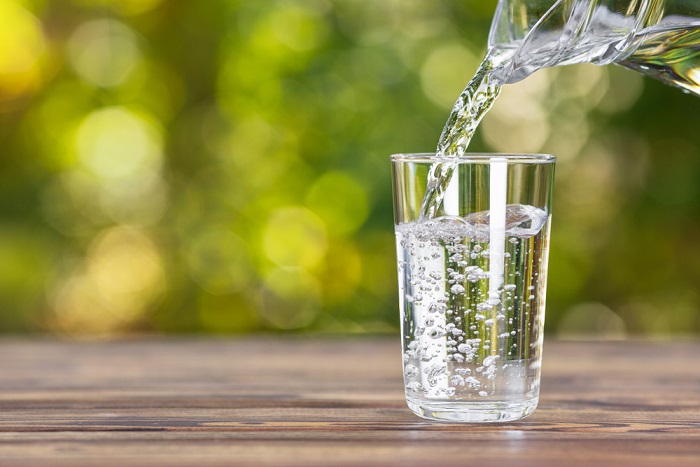
The premise is obvious: water is good for us , and we should drink it every day, without wasting it. But how much? Scientific authorities agree on an average value of 2 liters per day, which, for men, reaches up to 2,5 liters, according to the European Food Safety Authority (EFSA) and the guidelines of the Italian Ministry of Health.
Index of topics
When you need to drink more water
There are some general circumstances in which it is necessary to drink more water than the target of 2-2,5 liters per day . This is particularly true if:
More if:
- It's hot
- Do some physical activity, especially if
- You sweat a lot
- You are pregnant or breastfeeding
- You have fever, diarrhea or vomiting
A good indicator of when you need to drink more is the color of your urine: if it's light, you're well hydrated; if it's dark, you need to increase your daily water intake.
How much water should children drink?
In the case of children, it's important to keep in mind that they have a lower absolute water requirement, but at the same time, they lose water more rapidly than adults. Until the age of 4-5, their thirst regulation is immature, meaning their need for water is not yet fully developed. The following are guidelines for children's water requirements:
- 1–3 years: 1,1–1,3 L/day
- 4–8 years: 1,6 L/day
- 9–13 years: females 1,9 L; males 2,1 L
- Teenagers: they gradually approach adult values
Pediatricians recommend giving children small sips to drink, even when they aren't particularly thirsty, and avoiding water that's too cold.
How much water should seniors drink?
For the elderly, however, it's important to consider that the sensation of thirst diminishes, and the reduced thirst leads older people to almost automatically forgo proper hydration. Furthermore, they may have kidney or heart problems, and some medications can cause diuretic effects.
At this point, for the elderly, it's possible to go below 2 liters and down to 1,5 liters per day, but care must be taken to avoid the risk of silent dehydration. And to achieve this, simply combine the classic glass of water with other things:
- herbal teas and infusions
- brodi
- fruits and vegetables rich in water
When you need to drink
The idea that drinking during meals is "bad" or dilutes gastric juices is not supported by scientific evidence, so we can consider it fake news. You can and should drink before, during, and after meals: what really matters is to drink evenly throughout the day. Drinking too much water at once can cause bloating or even nausea.
In general it is very useful to drink:
- Upon awakening
After the night we are slightly dehydrated, and 1–2 glasses of water help reactivate metabolism and intestines. - Between meals
This drink promotes constant hydration and reduces the confusion between hunger and thirst. - Before physical activity
This improves performance and reduces the risk of dehydration.
Benefits of water
These are the main benefits of water:
- Helps to lose weightThe ideal is to drink a couple of glasses of water before eating, on an empty stomach: they activate satiety receptors and therefore reduce food cravings. Furthermore, water contributes to a healthy metabolism; it has no calories, carbohydrates, or sugars. It's the best possible alternative, and the most thirst-quenching, to any sugary drink or sweetener. This is why, ultimately, it's a natural weight-loss product.
- It's good for the brainOur brain needs water to ensure proper brain function. Simply put, water helps us think and remember better.
- Essential for the kidneysAnyone who has suffered from kidney stones at some point in their life will have heard the following advice from their doctor: drink plenty of water. Water dilutes the salts and minerals that then become small stones that are difficult to expel through urine, producing extremely painful kidney stones.
- The urinary systemIn general, the entire urinary system benefits significantly from water. Oligomineral waters, or waters with little minerals, not only prevent the formation of stones, but also improve diuresis, eliminate metabolic waste, and have anti-inflammatory and anti-infective effects. Those with reflux problems, however, may benefit from hypertonic waters, which have a lower reactivity in stimulating gastric secretion.
- Improves digestionThe best ones, with respect to this function, are the bicarbonate watersDrinking regularly reduces problems such as heartburn and intestinal disorders. Water also helps fight constipation.
- The skin becomes brighterThis is a very obvious effect of good hydration. Conversely, a lack of water leads to dark skin. Drinking water also improves skin elasticity (with an anti-aging effect), purifies the blood, and thus leaves the face clean and radiant. And, in the case of adolescence, with less acne.
- Regulates body temperatureThis is another vital and strategic function of water. This is especially true when we sweat: at that point, the body cools down, and it's important to stay well hydrated and avoid temperature fluctuations. Water is especially beneficial for those with hypertension, and according to an American study, five glasses of water a day reduce the risk of heart attack by 40 percent.
Read also:
- Why water is so important in our lives
How much water is needed to produce meat?
Don't waste water at home: 15 tips
Want to see a selection of our news?
- Sign up to our newsletter clicking here;
- We are also up Google News , activate the star to add us to your favorite sources;
- Follow us on Facebook, Instagram e Pinterest.