
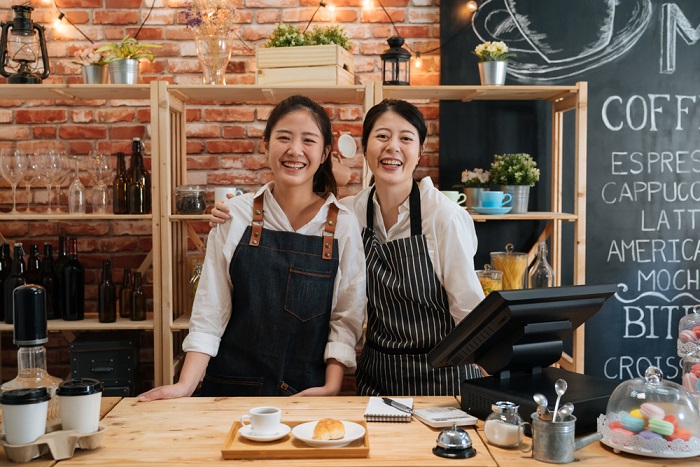
Bars in Milan and throughout Lombardy are increasingly speaking Chinese. The advance is military, relentless, and has long since crossed the boundaries of Chinatowns, where Orientals have now completely dominated the area, from shops to apartments, from craft workshops to every type of restaurant. Barriers have been lowered, and not just within the heart of the Lombard metropolis.
Chinese-run bars in Italy
Statistics show that in Milan, buoyed by the city's excellent health, one in ten bars is now owned by a Chinese family . And if we look at other Lombard towns, we see completely uncontrolled growth. 400-500 percent in just a few years. In Lodi, in 2011 there were seven Chinese bars; in 2019, there were twenty-three. In Lecco, we went from three to eighteen. Another important aspect of this trend is the type of purchase the Chinese are making, a sort of "turnkey" bar, where, in addition to the license to sell coffee, soft drinks, and sandwiches, there is also a license to sell tobacco. And thanks to the second lever, the all-round tobacco shop, the business of a small bar grows. And the coffers fill with cash. In practice, the bar from the Eastern perspective is a full-fledged enterprise that adds to the general expansion of the Chinese in Italy. Summarized in two numbers: 300,000 Chinese citizens residing in Italy and 50,000 super-active businesses , including bars.
Chinese-run bars in Milan
The Chinese advance in the world of bars , restaurants , related services, and commerce in general is nothing new. If anything, two things are surprising. The acceleration of the phenomenon, which seems unstoppable. And the total indifference, a sort of surrender, on the part of every level of public administration (the city council, the neighborhood council, the regional, provincial, etc.). Hands up, as if nothing really can be done. This is what happens in Rome , Naples , Venice , and Florence . Everywhere.
On the other hand, the Chinese are rich, have a lot of money to invest (often illegally) or launder, and have understood that Italy is a perfect place for trade. Especially small amounts that, when added together, become large. Our risk, our waste as Italians, faced with a reality we must deal with with extreme clarity, is something that goes far beyond economic aspects. A part of our identity is at stake here . And that's what we risk wasting, in our cities, in our neighborhoods. As individuals and as citizens.

Chinese bars and tobacconists in Italy
A bar is not just any place . It's not a shop like any other. It has a soul, roots, sometimes very deep, and branches that span the communities of a territory, a single area. Life, even a very intense one, unfolds around the bar, and that's why we can consider the bar a hub of relationships, human connections, and civilization. These are precious, yet intangible, assets that we cannot waste or abandon in our daily lives.
French writer and essayist George Steiner defines European identity, and therefore Italian identity, around five axioms. The first is that Europe has always had its own identity-building places in cafés and bars . For meetings and relationships . Where people once discussed, wrote, and, if you like, conspired. And where the comets of sharing, philosophical currents, artistic movements, ideological and aesthetic revolutions were born. Loves and moods, passions and conflicts. In a real café, and there are them everywhere in Italy, this extraordinary genetic heritage still exists; it hasn't been erased by coffee served and drunk only from vending machines. It hasn't been crushed under the tanks of online communication, and therefore deprived of physical contact. No, Italian-made cafés are still strategic places for our quality of life. And if we let the Chinese advance unchecked, we will simply have dealt yet another blow to the very way we interact, both as individuals and as communities.
Of course: we must deal, as we were saying, with reality. The Chinese know exactly where to put their hands and their money. In Rome , for example, they have advanced militarily throughout the historic center , knowing that these are places teeming with tourists with open wallets. It is the Chinese who dominate the commercial and public establishments on the streets leading to the Vatican. And if a Chinese person decides to buy from an Italian family, perhaps one that has owned a bar for generations, sooner or later they will succeed. They have the unbeatable weapon of money, and the simplicity of negotiation when the famous "can't refuse" offer arrives.

WHY ARE THERE SO MANY CHINESE BARS IN ITALY?
On the web, you can find a rather paradoxical example of this mechanism. We now have sites entirely dedicated to the purchase and sale of real estate and businesses between Italians, acting as sellers, and Chinese, acting as buyers, of course. This is the case with the site Vendereaicinesi.it: it even offers to translate the individual steps of the negotiation into Mandarin. Or the Neapolitan site Venderefacileaicinesi.it. The imbalance of power is also evident in what happens after the sale of a bar. Everything takes on the appearance of a Chinese world, starting with the language, the manners, and the tone of the people who work there. To the point that in some bars purchased by the Chinese, as often happens in Rome, work is reserved for Asian citizens. And it is forbidden , first and foremost, to a specific category of potential workers: Italians . This is just the latest in a chain of damage and waste linked to Chinese bartenders. And no one should dare to say that nothing can be done. Italian bars must be protected and defended somehow. How? As happens, for example, in Turin, where Chinese people struggle to get into the temples of coffee and hot chocolate. But of course, to help a café owner avoid succumbing to the lure of the Chinese, they'll need to make their lives easier, not burden them with taxes and bureaucracy , and not leave them reeling under the blows of high rents that always hit the most vulnerable. Even in commerce. Even in the café scene.
COFFEE, A COLLECTION OF PRECIOUS RECIPES:
- Toasted Hazelnut Cake: The Recipe with Coffee, Lemon Zest, and Ginger
- Coffee Cream: The Best Recipes
- Coffee popsicle with cream, the vegan recipe. Use only moka pot, no decaf.
- Coffee Cheesecake: The No-Bake Recipe
Want to see a selection of our news?
- Sign up to our newsletter clicking here;
- We are also up Google News , activate the star to add us to your favorite sources;
- Follow us on Facebook, Instagram e Pinterest.